

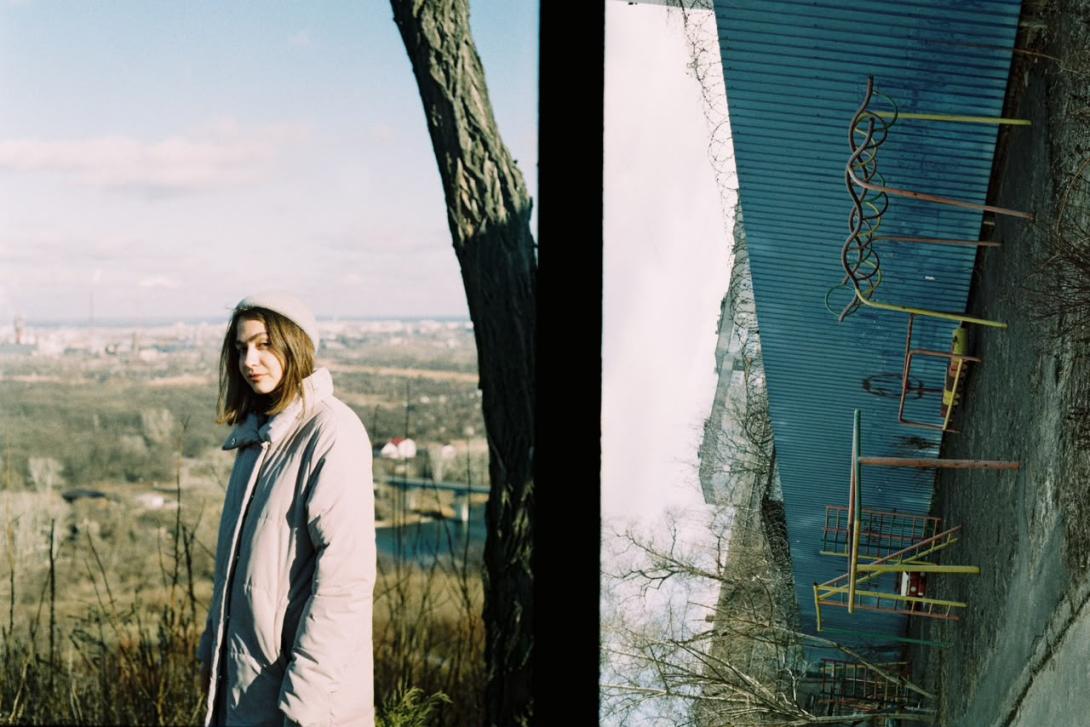
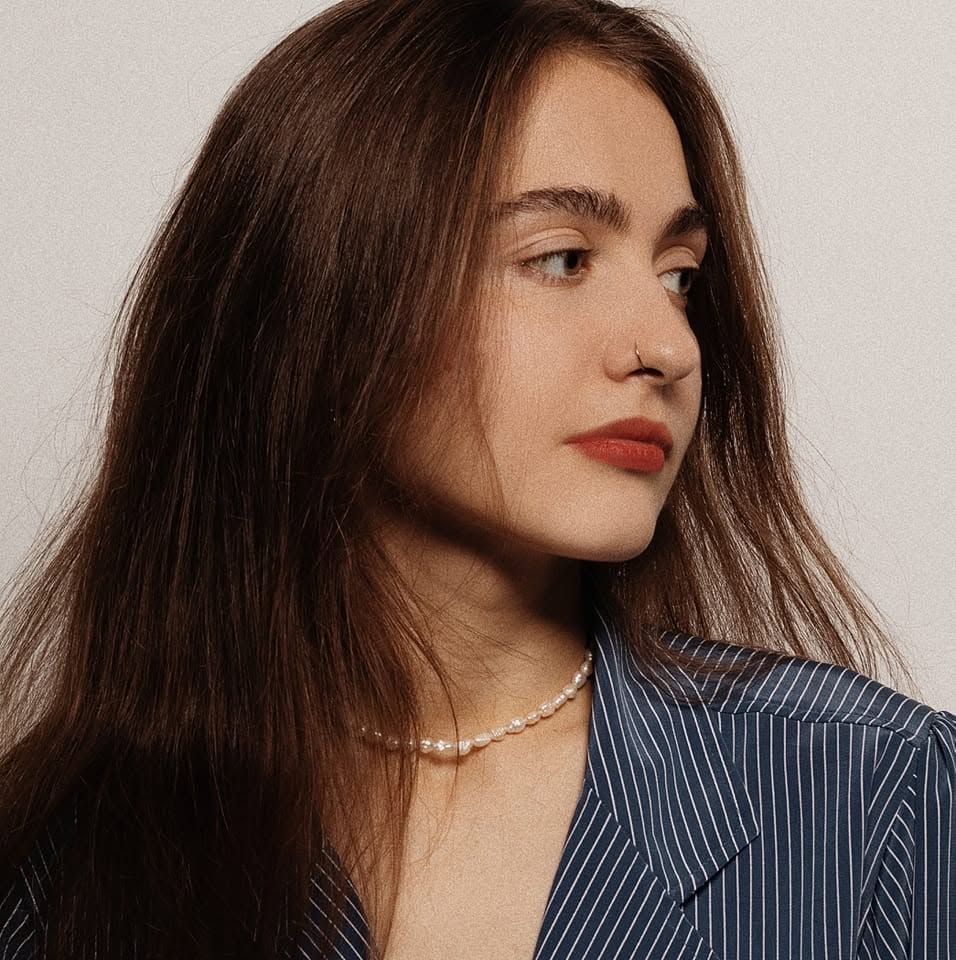
We met Anastasia Perepelichenko while reviewing her application for a refund of the first mortgage payment for residents of the Siverskodonetsk community. The young girl purchased an apartment in Lviv — this is a serious step, and the refund helped her cover many expenses. We learned that Anastasia works as a media worker in the public sector, in particular, helping active youth — so we decided to interview her and talk about public initiatives, local identities of the Luhansk region, and teenage memories of Sever.
— First, tell us a little about yourself. Where do you work?
— I work in the field of public sector communications. I head the communications department at the public organization " STAN ", I work with communications at the charitable foundation " Depol ", and I am also a co-founder of the project " Bo Media ".
We created Bo Media in 2022 as a response to the way young people consume news. We wanted to return to slower formats — explainers about human rights, culture, politics, and activism — but make them interesting and accessible. All content in the project is created by authors who share these values and work on a volunteer basis. Today, I am no longer involved in the operational activities of the project, but I am very happy that the team continues to develop it.
The NGO "STAN" was founded in Luhansk in the late 1990s as a literary association. After the beginning of the Russian aggression in 2014, the organization relocated to Ivano-Frankivsk and gradually focused on working with youth, non-formal education, and community development.
For me, this work is also a way to stay connected to the Luhansk region. Many of my colleagues come from the Luhansk and Donetsk regions, so this regional experience remains an important part of what we do today.
— Let's talk about local identity. Do you feel a connection to Siverskodonetsk? What memories do you have of the city?
— I lived in Siverskodonetsk before entering the Kharkiv State Academy of Culture in 2016, where I studied cultural studies. After completing my studies, I returned to the city and worked for a year at the Luhansk Regional Center for Educational and Methodological Work, Cultural Initiatives, and Cinematography.
It was an interesting professional experience. We not only implemented the events provided for by the regional program, but also launched our own cultural projects. One of them was a cultural hackathon. We worked with the regional communities, helped local activists develop ideas for cultural events, and the strongest initiatives received funding and became part of the regional plan of cultural events. For me, as a young specialist, it was an opportunity to see how culture can become a tool for community development.
— Share your childhood memories of Siverskodonetsk. Where did you live there?
— I lived on Avtomobilnaya Street. To be honest, I don't even know which district it belonged to. But I remember well the Kapustochka store nearby.
For me, as a teenager, Siverskodonetsk was a very comfortable city. Before that, I studied in both Luhansk and Lutuhyne, so I had the opportunity to see a very different Luhansk region. That's why I'm always a little surprised when people talk about the region as something homogeneous.
Siverskodonetsk felt different. This was Slobozhanshchyna — with a different landscape, a different atmosphere, a different rhythm of life. It is this space that still largely defines my sense of home today.
— As far as I know, you moved to Lviv in 2022?
— Actually, a little earlier — a few months before the full-scale invasion began. I moved to Lviv from Kharkiv, where I studied at the Ukrainian Catholic University.
At that time, I just wanted to live in a different city, to try a new phase of life. I didn't plan to stay here forever — it was more of a desire for a change of environment.
I arrived in Lviv literally on December 31. And within a few weeks, after the start of the full-scale war, my parents, my boyfriend's family, who is originally from Kharkiv, and friends from Kharkiv, Luhansk, and Kyiv, ended up here. So Lviv very quickly became a place where close people gathered.
— How was your adaptation in Lviv? Did you feel regional differences? Were there any cultural discoveries?
— They still happen. I wouldn't call it culture shock, but I'm still surprised by certain everyday things.
For example, I recently found out that many of my acquaintances from Lviv region have never eaten strawberry dumplings. I even conducted a small "anthropological study": all my friends from Luhansk region mentioned that their grandmothers used to make such dumplings, while this tradition is almost unknown here.
It's these little things that make up the sense of regional diversity. I'm really interested in exploring it.
Another thing I noticed is stereotypes. And not just negative ones, but positive ones as well. Both can be equally harmful.
For example, I have been told more than once: “Your Ukrainian is so good! You must be from central Ukraine?” or: “I would never have thought that people from Luhansk region could be like that.”
Such words sound like a compliment, but at the same time they show that the interlocutor had certain prejudices even before meeting me.
I am very lucky with my environment. Both at work and among friends, I am surrounded by people who are interested in exploring different experiences, rather than evaluating them through stereotypes. That is why for me the topic of local identities is not about opposing regions, but about being curious about each other. At the same time, I know that many people face discrimination based on origin, and I am very sorry that this still happens. I would like everyone to have a space where they can be themselves without having to prove anything.
— Speaking of local identities in Luhansk Region, what projects or books would you recommend?
— The first projects that come to mind are the Neotodresh Gallery projects. After the start of the full-scale invasion, they published two very important books.
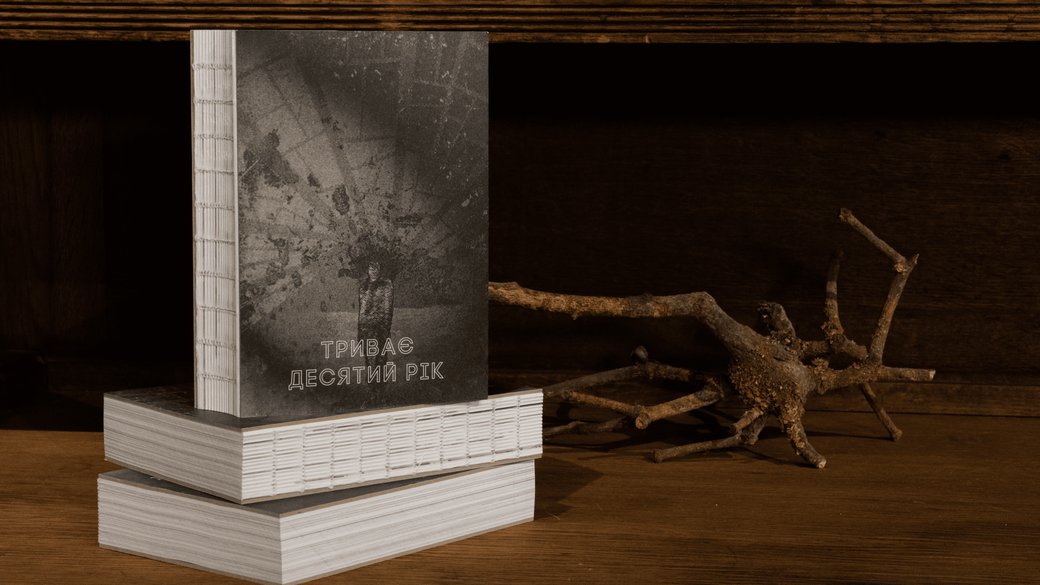
The first is a collection of interviews with activists, artists, cultural managers, and other people who developed the cultural life of Luhansk and Donetsk regions after 2014. It helps to see the region through the people who created it.
The second book is dedicated to the topic of local identity and the experience of war. In it, young people talk about life after 2014, including the experience of occupation. For me, it is very valuable that these stories were recorded. Such publications not only help to better understand the region today, but will also become important sources for future researchers.
— You became a participant in the down payment reimbursement program. How did it all go? Are you satisfied with the result?
— Yes, of course.
The very fact that a young person can get a mortgage in Ukraine today is already a great opportunity. But even when such an opportunity arises, the down payment remains a serious financial barrier.
For me, participating in the program was a way to make this step much easier. The reimbursement of the down payment gave me a sense of greater financial security and allowed me to direct the funds towards other expenses that inevitably arise when buying my own home.
— In your opinion, what are the most pressing challenges facing internally displaced people today? What is missing the most?
— It is difficult for me to speak on behalf of all internally displaced people, because they have very different experiences and needs. These include older people, people with disabilities, military families, and young people.
I can speak primarily about young people, because I myself belong to this community and work with young people. We regularly conduct qualitative research and interviews, and we see very clearly how their needs have changed during the years of full-scale war.
Many young people today live in a state of exhaustion. They find it increasingly difficult to meet even basic needs, and the demand for safe spaces, community, and opportunities to recover is only growing.
I would like the state, local governments, public organizations and local communities to work on this together. Young people need not only material support or housing. It is equally important to have the opportunity to recover, learn, build connections and see their future in Ukraine. This is, in my opinion, one of the key challenges today.