

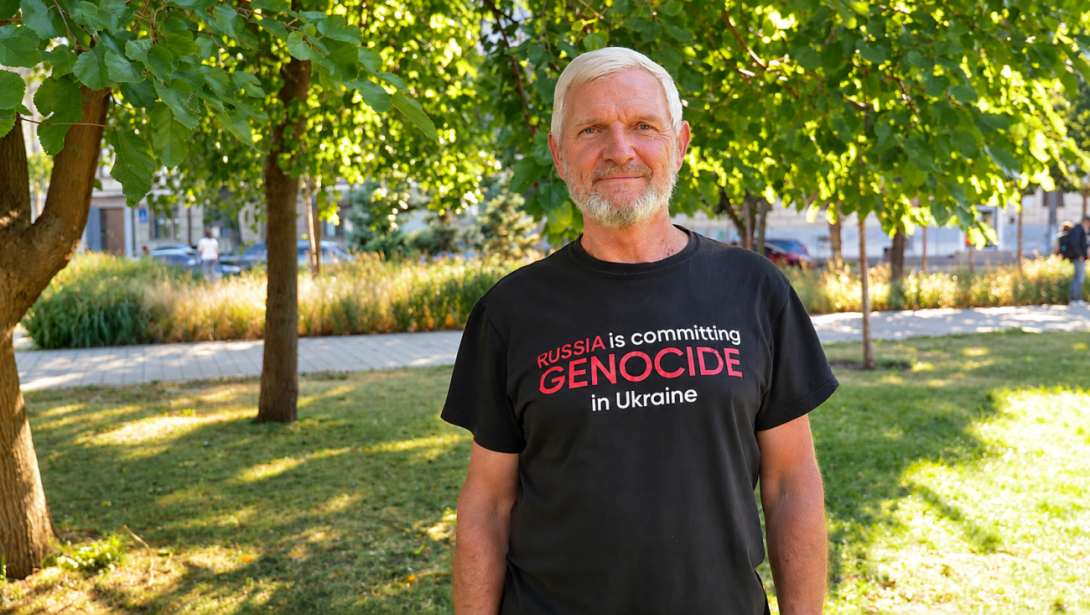
Mykola Skuridin was an IT specialist when this word was not yet known in Ukraine. After retiring, he began traveling around Luhansk Region, went fishing, to mines and waste dumps, and to see historical monuments. And all this by bicycle. And when he learned about Bicycle Day, he organized it in Siverskodonetsk.
Now Mykola Skuridin is looking for Siverskodonetsk residents in various cities in Europe and Ukraine. He simply meets with some, stays with some for two or three days, and someone shows him the city in which he now lives. After such meetings, there are often joint photos that Mykola signs: "Our people are everywhere."
When the time came
Mykola Skuridin is 66 years old, he has lived in Siverskodonetsk almost all his life. He worked for ten years at Impuls, then at Azot, and there were other large and small enterprises. The word IT was not used then - everyone was called programmers.
"I did everything a computer could do. There were times when I was the only one in charge of the entire enterprise: finances, accounting, warehouses — all of this had to be processed to make it work," recalls Mr. Mykola.
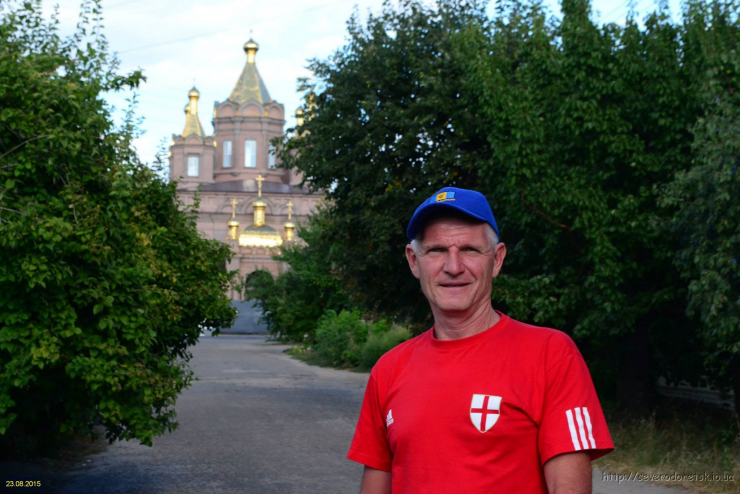
Mykola Skuridin
The time for my own hobbies appeared much later, already in retirement, but the desire to travel was always there.
"I guess my thirst for travel is genetic. Most of my life was spent in perestroika, there were very difficult times. I had to work, practically without vacations. They could give me money compensation for vacations, and that was it. I had very little free time. And when I became a pensioner, I had more of it, and now I'm making up for what I couldn't do before," he says.
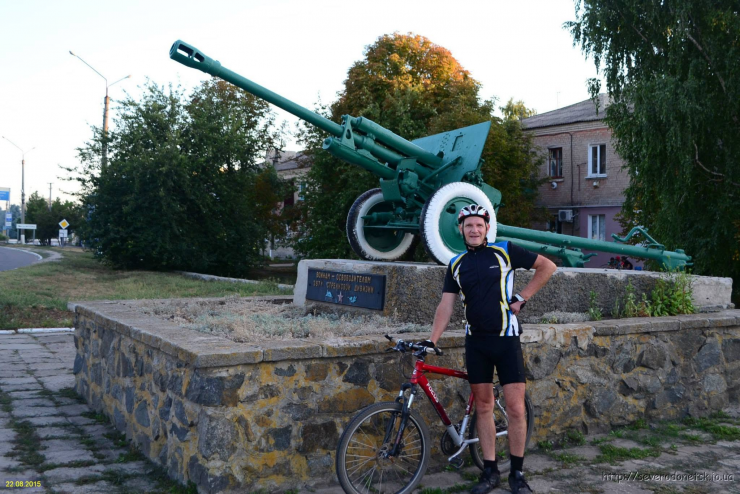
Even a bicycle appeared in his life, as Mykola himself believes, late. He learned to ride one at the institute, but he started riding it actively much later, when his son gave him his own bicycle. Later, Mykola read on the Internet about Bicycle Day, which was held at the end of May.
He remembers one of them well: about eight cyclists from Lysychansk came to Siverskodonetsk, and three locals joined in. The participants made two laps around the square in front of the city council — and that was the end of it.
"I felt so uncomfortable in front of the people of Lysychansk. People came, but there was nothing particularly interesting. I thought that more could be done," recalls Mr. Mykola.
The following year, he decided to organize the Bike Day himself. The event coincided with the celebration of City Day and Chemist Day, so Mykola went to the city council and proposed holding a bike ride through the city.
"There was a meeting about the celebration. I said that I wanted to organize a Bike Day, and they told me: 'Then go to the forest and hold your Bike Day there.' I said: 'That's a slightly different goal, it's popularization.' And a police representative nearby said: 'You take my passport right away.' They said that if something happened, I could be arrested right away. That was the attitude," he says.
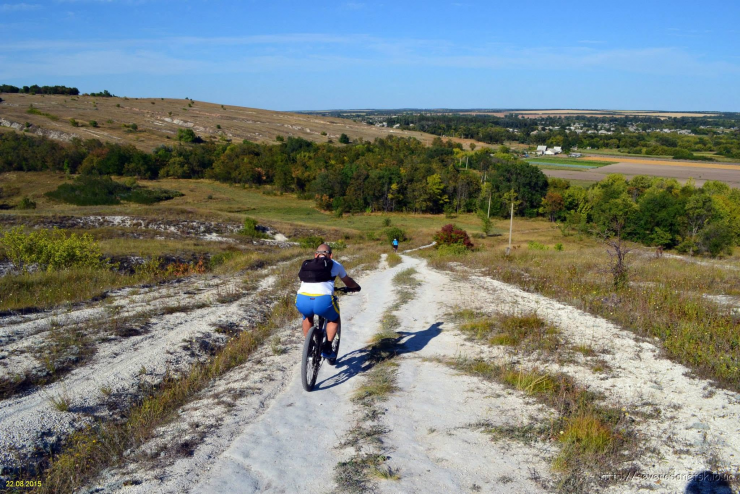
Travel
The city council explained that they could not guarantee the safety of cyclists: the route had many intersections and exits from yards, from where a car could appear at any moment. The responsibility remained with the organizer. Mykola did not give up on the idea. The cyclists rode through the city without police escort, and then, as he recalls, they set off for Kleshnia.
After that, Bike Day was held every year in May. The exception was 2014. Then, cyclists gathered after the liberation of Siverskodonetsk.
"There were a lot of people, all with flags. There was such inspiration after the liberation. And then one bike day a year became not enough. We did bike quests several times, I developed the plots for them myself. I was interested in it, so I did it," he says.
Aidar, pike and mine
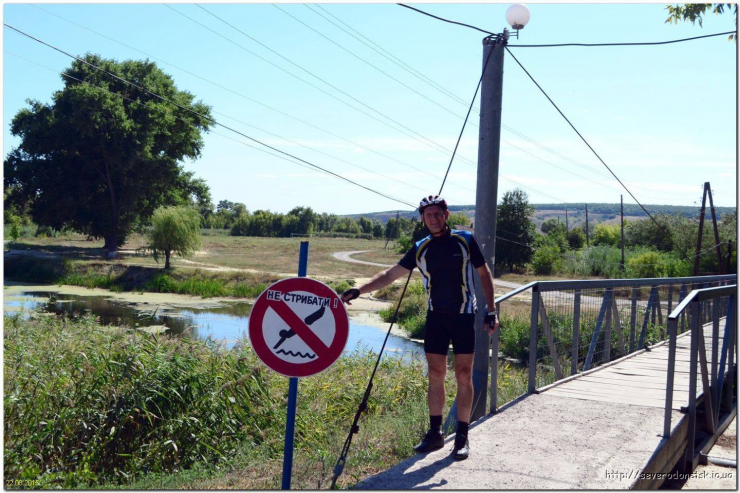
When Mykola is asked about a special place in Luhansk Region, he says, “I love everything.” One of his fondest memories is a four-day trip with friends along the Aidar River for the May holidays. We took tents, spinning rods, and rode far along the river.
"These were the most interesting and enjoyable trips. Everything was wonderful there — nature and freedom. I had a friend who worked a lot abroad. He said: 'You have no idea how much freedom we have in Ukraine.' We can stop anywhere, put up a tent anywhere, fish anywhere. Everyone says: 'Abroad, abroad...', but there is no such freedom there. Maybe there is another, but not this one," says Mykola.
Almost every weekend we went to the Seversky Donets to catch pike.
“Regardless of whether they caught it or not, we had a lot of fun. And all on bicycles, of course. In recent years, electric bicycles have become available for long trips. But the good thing about a bicycle is that you can ride it on any trail, anywhere,” he says.
Mykola Skuridin
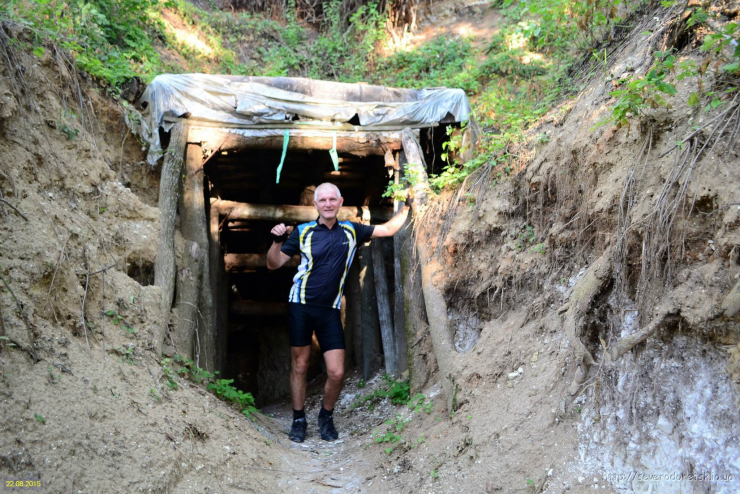
One hobby eventually gave way to another, and the range of interests grew and grew. Mykola was interested in the history of Lysychansk, waste heaps, and paleontology. Together with a small group, he went down to the Melnikov mine.
"It was very difficult, but we still went there, down there, on an excursion. An unforgettable impression. In recent years, I have developed so many hobbies that I miss all of it very much," says Mykola.
Through local historian Serhiy Kalenyuk, whose research has been repeatedly published on SD.UA , he met the chief architect of Lysychansk, Mykola Lomako, and began researching information about Lysychansk and Slavo-Serbia. And suddenly it became clear that even the names familiar from childhood hide a history that no one explained at the time.
"Here is the Third Company . At school, we knew that such a company existed, we heard about Depreradovič, but who would have said then what it was connected with, why it was called that? Then we started traveling with Lomako to the places of these companies. Not all of them, but many of them visited, we looked at Serbian cemeteries. It was very interesting," he says.
Mykola Skuridin
He has also been to gypsum caves near Bakhmut. He remembers sloping horizons and underground tunnels.
"It's very beautiful there. Caves, sloping horizons, several tunnels flooded with water. And now, having experience of how tourist attractions are designed in Europe, I think it could be done very beautifully there too," he says.
Our people are everywhere
One of the permanent stops on Mykola's current itineraries is Germany, where his grandson lives.
"I try to see him more often. He loves me, and I love him very much. He is the only one I have, and there are only women around him. Therefore, I believe that we need to somehow help him become a man in the future," Mykola smiles.
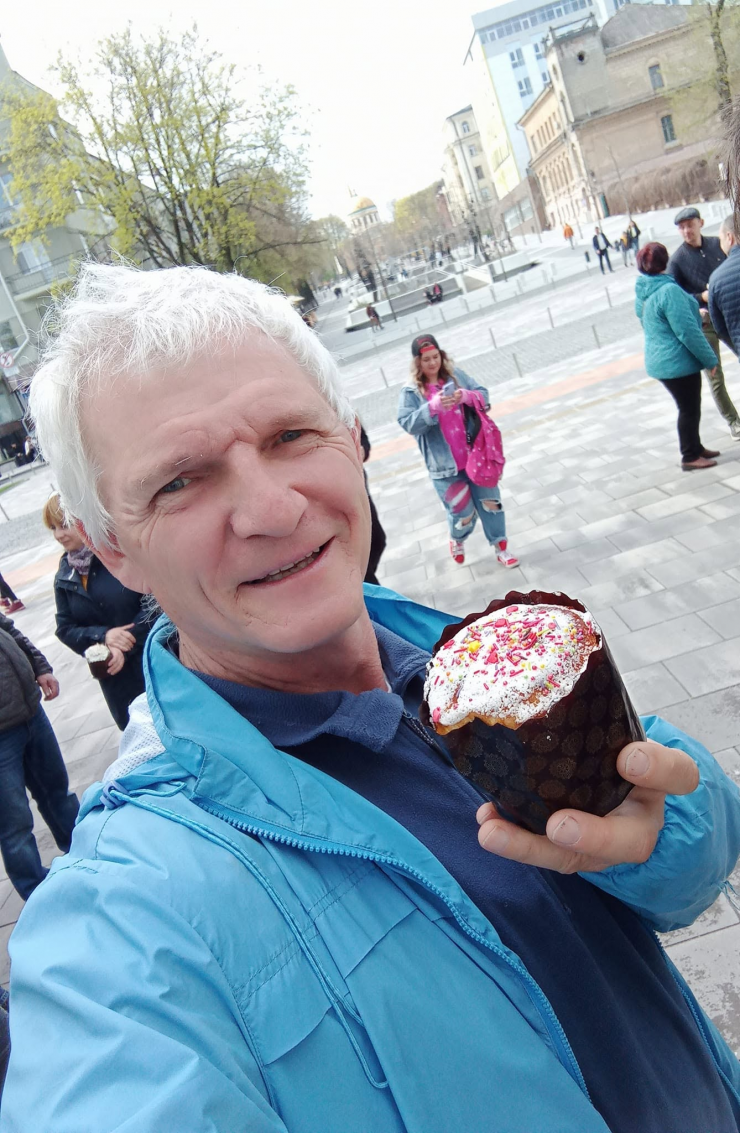
In different countries, he finds his old acquaintances. He knows many of them through the cycling community, others through decades of work at various enterprises and participation in the cultural life of Siverskodonetsk. Mykola calls himself a "free man": while others are tied to work, he can stay with someone for two or three days. His compatriots take him in and show him the cities in which they now live.
Mykola Skuridin
And Nikolai decided to count the number of acquaintances.
“I’m an AIT person — I need to sort everything out. I have a map with about 150 Siverskodonetsk residents I know who live in Europe. Of course, I can’t reach everyone. And not everyone is happy to remember the past,” he says.
When Mykola is asked what the most amazing thing he has seen during this time, he laughs: “Oh, I am happy about everything.” He immediately recalls one of the stories about a museum in Germany.
There was a small dinosaur in the natural history museum, which Mykola's grandson wanted to climb.
"It turned out that everything there is possible to climb on, children are allowed to climb on. We have nothing - everything is behind glass, don't touch anything. And there are many exhibits there, very accurate copies that are just lying around and that you can pick up. Children are allowed to explore everything," says Mykola.
He especially remembered the master class on old printing.
"For example, they tell how Gutenberg printed his book — please, a master class every hour. You type the letters yourself, apply paint with a roller, then press it — wow! These are completely different museums. These are not Stalin's greatcoat or Voroshilov's cap, soaked in mothballs and hidden behind glass," he says.
In another exhibit, a regular city model simply turned into a screen during the story.
"There's a model of the city, they tell a story, and this model turns into a screen, projectors draw and show everything from above. Super technology. We're far from that. Of course, it's a lot of money. But they're investing in it," says Mykola.
I don't want to be sad.
When the conversation returns to Siverskodonetsk, Mykola says that he deliberately does not want to miss it.
"I don't want to be sad and I don't. I only remember what was pleasant, everything was good. Why be sad? It's unproductive, it doesn't give anything. Of course, there were all sorts of things, but everything in life passes," he says.
Mykola Skuridin
And in his memories, Siverskodonetsk remains, first and foremost, its people.
"We love our city, we remember it. When asked what I like about it, it's a very difficult question. First of all, the people, my friends. They stayed, regardless of whether they are there or have moved somewhere. Therefore, remembering the city, I remember them. And they are wonderful, I am very pleased to meet them. There is hope that someday we will all get together. And when that will be, is unknown. So I will wait patiently," says Mykola Skuridin.
Maryna Tereshchenko