
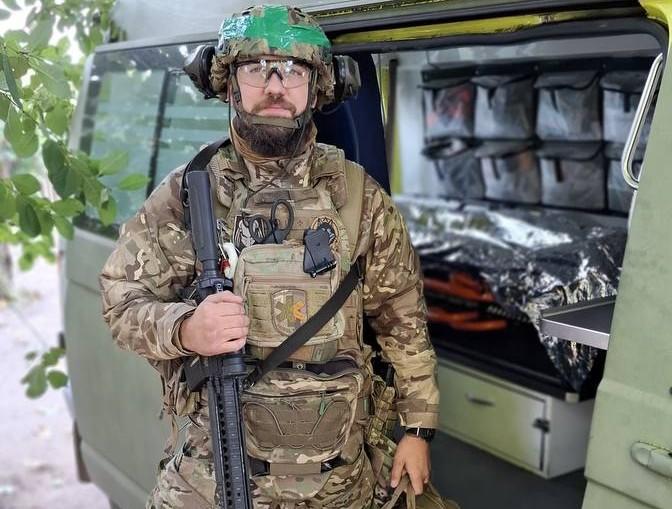
When the full-scale invasion began, Mykhailo Zharkov, a native of Siverskodonetsk, was serving in the patrol police. In the first months of the great war, he patrolled the front-line cities of Luhansk Region, helping to evacuate civilians and delivering humanitarian aid.
Even before 2022, after completing courses in first aid, he realized that he wanted to devote himself to combat medicine, and independently deepened his knowledge in this field.
Some time after leaving the Luhansk region, he continued his service in the Kramatorsk-Slovyansk patrol police battalion.
In 2025, after a long wait, the policeman joined the first-aid company of the “Predator” combat brigade of the Patrol Police Department. Currently, Mykhailo Zharkov is the senior group leader of the wounded collection point in the Kostyantynivka direction. Together with the team, he works as close as possible to the line of combat contact, ensuring the provision of medical care to wounded soldiers.
In an interview with SD.UA, Mykhailo Zharkov talked about his path to combat medicine, his first experience rescuing a seriously wounded person, and the peculiarities of the work of combat medics under the constant threat of enemy drones.
- Where were you on February 24, 2022? What were you doing in the first weeks of a full-scale war?
- On the morning of February 24, 2022, I was on duty in Siverskodonetsk. That's when the first explosion occurred. At that moment, we were just near the military registration and enlistment office.
On the first day of the full-scale invasion, we were taken to the Dnieper. We stayed there for a while. Then we went to Lysychansk and stayed there until the last. We delivered humanitarian aid, helped people evacuate, and, as much as possible, maintained order in our cities.
I remember that in the first days of the invasion of Lysychansk, there was an airstrike in the “Litak” area. My partner and I immediately went to the scene. People approached us and told us that a woman was lying there with a serious wound. We immediately ran to her and put a tourniquet on her. Later, a photo from that incident spread widely online.
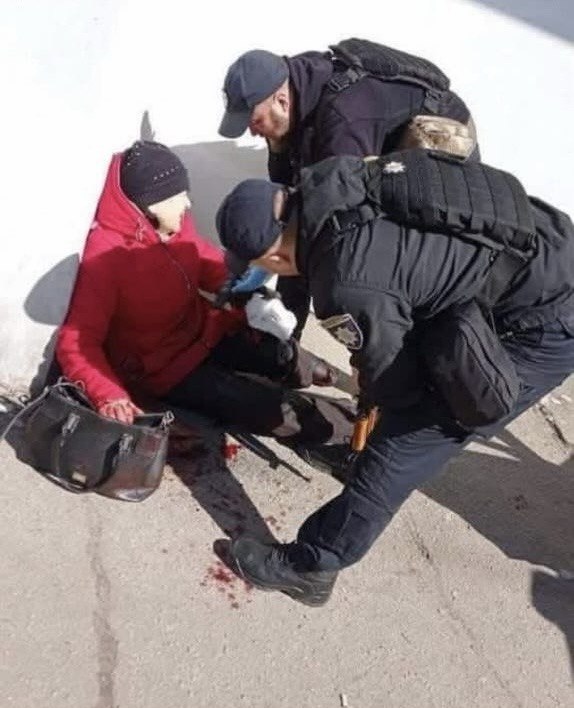
Lysychansk, 2022
- When did you leave Luhansk Region? What was your last memorable day before leaving?
- After we were all taken out, I was still returning home in my own car to pick up some things. It was the beginning of June.
It was very sad. The city had already suffered numerous destructions, people were sitting in basements with a lack of understanding in their eyes – what to do next, what would happen in general. Everything around seemed like some kind of illusion.
I told all my friends and acquaintances that we had to leave, take everything we needed with us, because there was a high probability that we would, unfortunately, not be able to return home in the near future. And while I was telling others this, I myself didn't fully believe that this could happen...
- How did you choose the path of a combat medic?
- The topic of combat medicine interested me even before 2022. The head of our department sent the entire unit to a two-week course in first aid. Actually, after that, I became interested in this field. However, it was impossible to realize myself as a combat medic in the police at that time, so I independently read specialized literature, studied and deepened my knowledge.
Since 2023, I have served in the Kramatorsk-Slovyansk patrol police battalion.
Later, when I learned that there was a recruitment drive for the first aid company of the “Predator” combat brigade under the Patrol Police Department, I immediately decided to try to get there. But it turned out to be not so quick and not so easy – I had to wait a long time. Eventually, in 2025, I joined the unit.
I am very passionate about this work. I approach it with great responsibility and dedication, I am constantly learning, reading, exploring new approaches and improving my skills. I feel that I am in my right place.
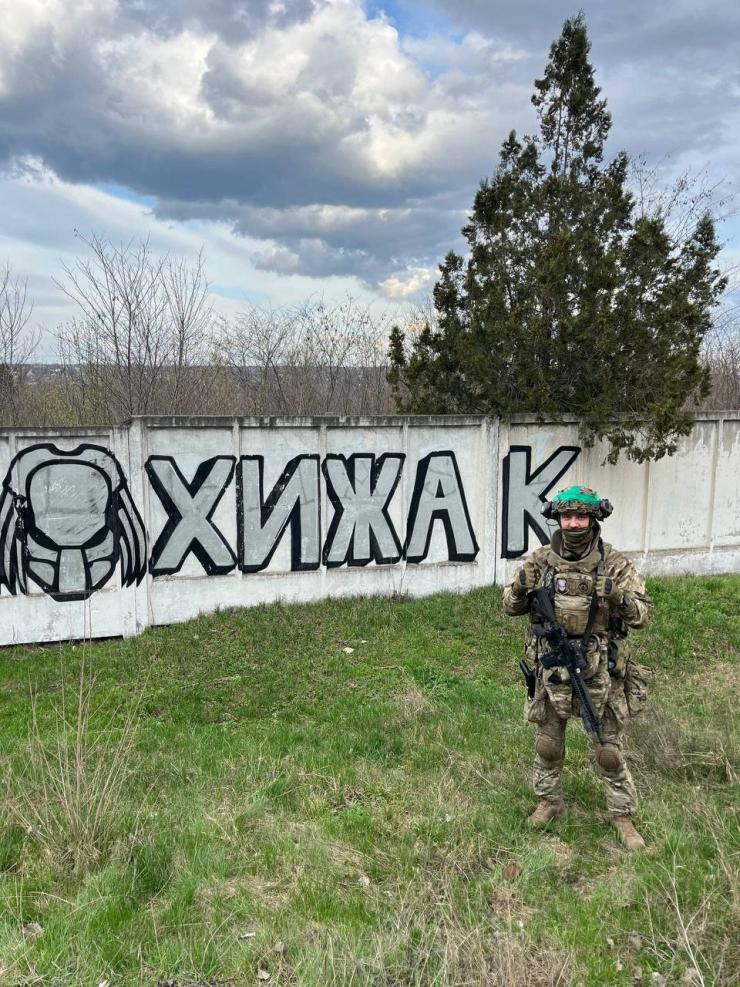
Mykhailo Zharkov
- How much does your experience in the police service help you today when performing combat missions?
- The experience of serving in the police is very helpful. First of all, it is discipline, responsibility, communication skills, and fire training skills. It taught me to keep my cool, control myself, and not give in to emotions.
As for medicine, the basic knowledge I had before was very far from the skills I have now. Everything else came through training, constant practice, and continuous improvement.
- What are the responsibilities of the senior group leader of the wounded collection point? What are you responsible for?
- We work as close as possible to the areas where our brigade is performing combat missions. This is a small point where wounded people from both our and neighboring units can be transported. There we provide the necessary assistance in field conditions and prepare the fighters for further evacuation.
First of all, I am responsible for my team and our position. I control the cost of medical supplies, assess who needs to be helped and how much, and how to use available supplies efficiently. It is not always possible to quickly replenish medicines or equipment, so sometimes you have to conduct medical triage and make difficult decisions to ensure that there is enough help for everyone who needs it.
My task is also to safely lead the team into position, lead them out, and do everything possible to ensure that our workplace remains unnoticed by the enemy.
As for medical care, I am absolutely calm. Gradually, I managed to form a strong team. We work very harmoniously, we understand each other literally with half a word, and sometimes even with one look. Everyone knows their duties and clearly performs their work. We are all well trained, so we are confident in each other.
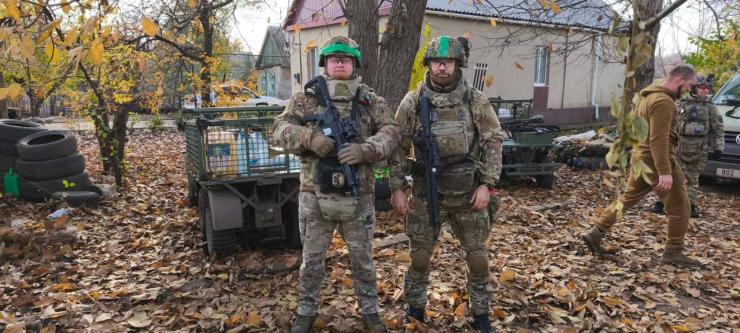
With the team
- What does your typical day on duty look like, if at all in wartime you can talk about a "typical day"?
- First of all, it is the complete absence of a normal sleep schedule. After returning to the point of permanent deployment, it is still difficult to regain consciousness for a long time.
If there is no work, then the day passes quite calmly: we woke up, had dinner, and then everyone does something of their own. You can't bring a tablet here, the phone quickly gets boring, so we read books, chat, play games, somehow entertain ourselves. And at the same time, everyone hopes that there will be no work. Once my friend said a very apt phrase: "All units pray that the medics will not have work." Because if we have work, it means that someone is very unwell. So we sit, wait, and hope that it will stay that way.
But everything can change in a matter of seconds. One day we were sitting upstairs: drinking coffee, I was reading a book, my partner was watching something on his phone, and a third colleague was napping in the basement. Suddenly we heard shouts: “Guys, help!” We ran out and found out that nearby, at an intersection, an FPV drone had hit a soldier and he urgently needed help.
Those who came running to us didn't even know we were combat medics. They were just running from house to house looking for anyone who could help. They were soldiers from the air defense unit.
We immediately grabbed our medical backpacks, put on our armor, and ran to the scene of the explosion. It wasn't far, about eight houses away. We saw a large pool of blood there, and then we realized where the wounded man had been dragged.
The guy was already lying with four tourniquets – on each limb. We immediately noticed at least two broken legs. At this point, he was still trying to work out the FPV drone for us. We quickly checked the tourniquets and saw that some of them were applied ineffectively, so we replaced them.
After that, they explained that we were combat medics and that we had a wounded collection point nearby. Together with soldiers from neighboring units (there were both military and police), we evacuated the wounded man to us.
Later, the doctors from his unit, who, as it turned out, were right next door, joined in. The four of us started working: we removed the tourniquets, packed the wounds, immobilized the limbs, and administered plasma and the necessary medications according to the protocol.
We provided all the assistance in about an hour and a half. In another half hour, the wounded man was already taken away for evacuation. That is, about two hours passed from the moment of injury to evacuation. In fact, something extraordinary happened. Everyone immediately took charge of their area, no one interfered with anyone else, everyone acted clearly, coherently and professionally.
And that's exactly what our service is like. You can sit for a week without a single challenge and not know where to put yourself, and then in an instant find yourself in a situation where every second decides a person's life.
That is why we constantly reread protocols, repeat action algorithms, refresh our knowledge. At a critical moment, there is no time to remember what to do or who to call. Everything has to work automatically, because in our work, seconds count.
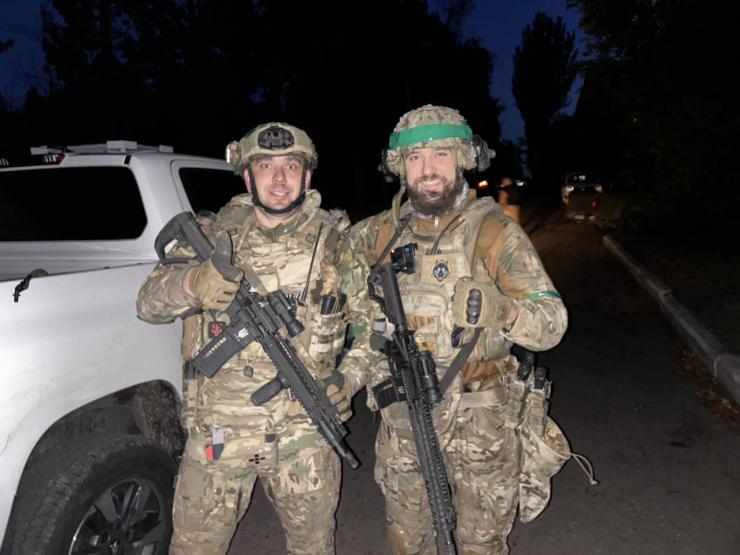
With a sibling
- Is the fate of this soldier currently known?
- As far as I know, one of his legs was amputated below the knee. Unfortunately, I don't know the reason. Perhaps this is due to the nature of the fracture or other injuries, because the evacuation was quite quick. At the same time, we managed to save the other three limbs.
- Mr. Mykhailo, do you remember your first wounded person whom you provided assistance to as a combat medic?
- Yes, I remember very well. We were in position, working on a casevac. At night, we were woken up by soldiers from an adjacent unit. They reported that nearby their armored combat vehicle had been hit by an FPV drone. There were nine people in the vehicle: one died on the spot, one was seriously injured, and another seven reached us on their own for help.
We immediately ran outside. Two soldiers came in completely naked, they had second-degree burns almost all over their bodies, with large blisters. There were four of us, so each of us took a wounded person and started working. Later, more guys with lighter burns came up.
I grabbed my medical backpack and ran to the most seriously injured man, who was about 300 meters away. He was almost completely burned. His burnt body armor was literally stuck to his body. He had a traumatic leg amputation, and the tourniquet he had applied was ineffective, so he continued to lose blood.
At that moment, I literally froze for a second, and then I started remembering everything I had been taught and what I had read and started working on.
Everyone around me was talking, so I quickly gathered myself, asked everyone to calm down, carefully took off the bulletproof vest, tightened the turnstiles, and then we carried the wounded man to our station.
In about five minutes we were already taking him to our medevac, because the medics of his unit could not get to the place, and there was almost no time left. He lost a lot of blood. At that time we did not yet have plasma or blood supplies, because the format of work on the casevac was somewhat different.
He survived.
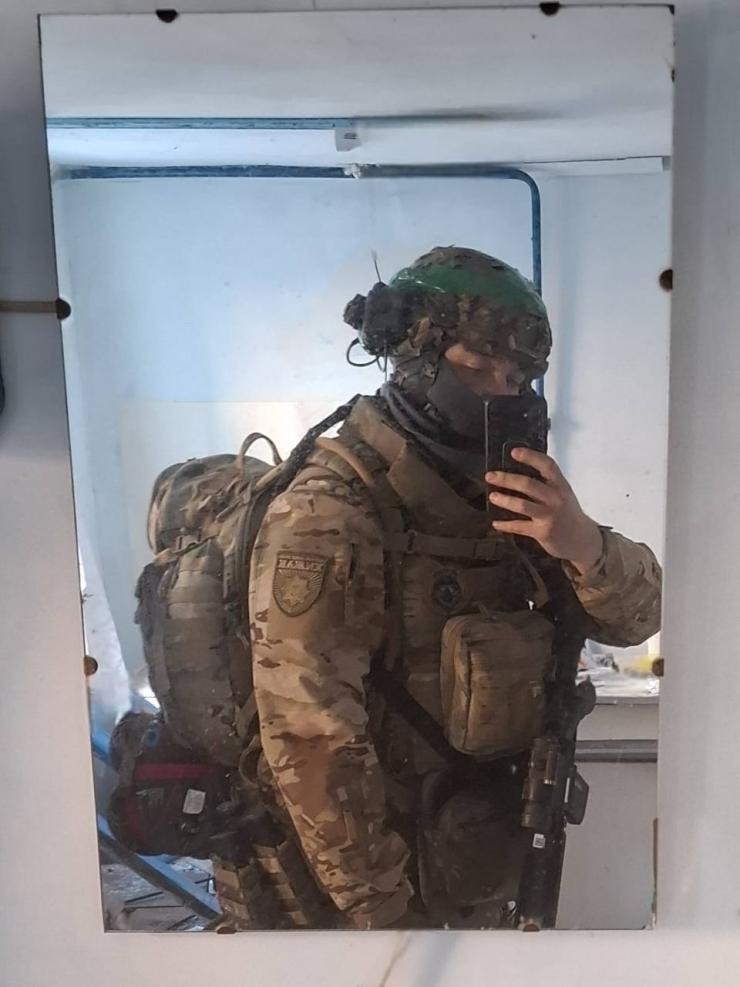
Mykhailo Zharkov
- You mentioned earlier that police service taught you to be cool-headed. How do you manage to maintain your cool-headedness today in situations where the price of a mistake is human life?
- Constant training, courses, and practicing various scenarios help the most. Thanks to this, many actions become automatic, mechanical memory. At a critical moment, you no longer waste time thinking, but simply do what you have to do.
On a combat mission, you turn off panic and emotions, leaving only cold calculation. You have three main tasks: ensuring your own safety, the safety of your team, and saving the wounded. And all decisions must be made with the coolest possible head.
While you are on the position, you constantly feel adrenaline, it keeps you in good shape. And after returning to the point of permanent deployment, after a day or two, the tension begins to subside. Then everything you experienced seems to come back: you remember the events, you start to think about them more, perceive them more emotionally.
But the main thing is not to let everything pass you by. If you constantly carry it inside you, you may simply not be able to stand it.
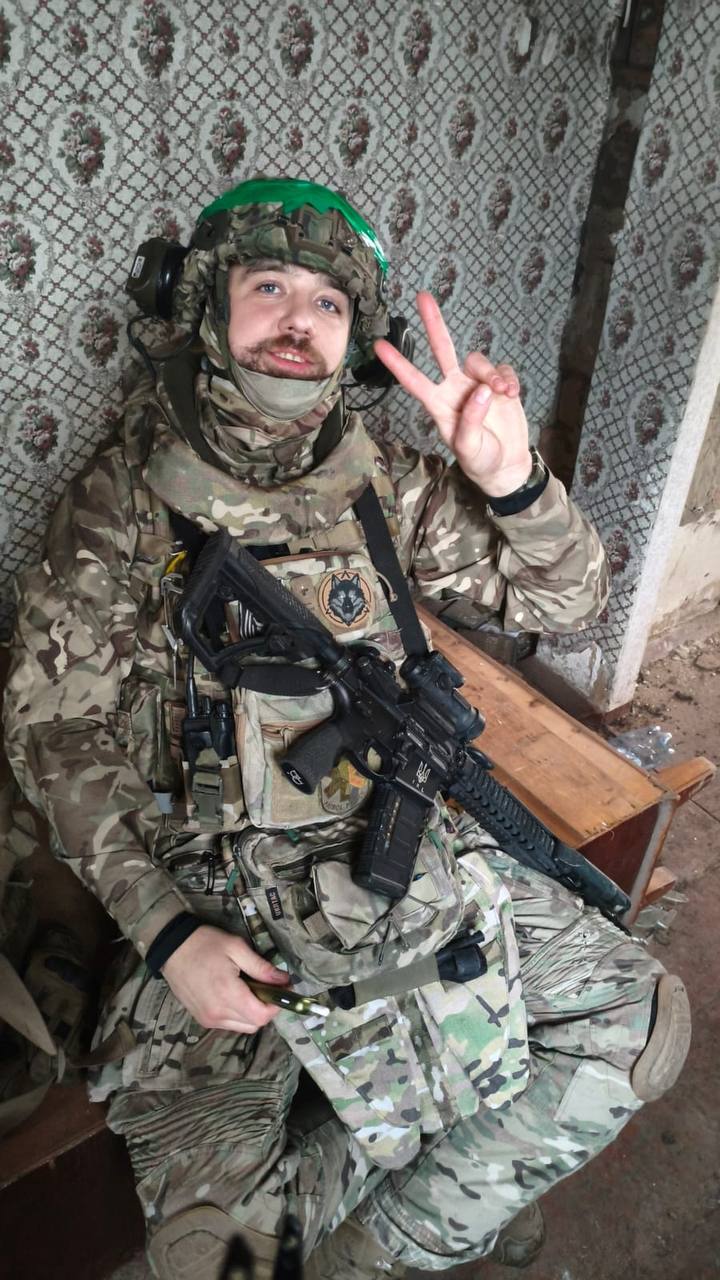
Mykhailo Zharkov
- If it doesn't pose a security threat, in which direction are you currently performing combat missions? What is the situation there today?
- We are currently performing combat missions in the Konstantinivka direction.
Due to the specifics of my work, I am directly at my position and only know what is happening nearby. I do not have complete information about the general situation in the direction.
I am aware of individual attempts by Russian sabotage and reconnaissance groups to break through to our positions, but I cannot comment on the operational situation in more detail.
- How difficult is it to enter and exit the position?
- It is very difficult. Unfortunately, the enemy controls the sky almost along the entire route of our movement. Every day it becomes more and more difficult to enter and exit positions. There is no point in bringing in equipment.
Walking is a bit easier, because you are more mobile: you can change your route or hide faster. And a large armored vehicle actually becomes a priority target for the enemy in an instant.
As far as I know, ours are also causing the enemy no less problems. But recently the situation has really become more complicated, activity in the air has increased many times.
Despite this, we continue to carry out our tasks. Sometimes we still manage to drive in with equipment: we quickly arrived, unloaded, and left immediately.
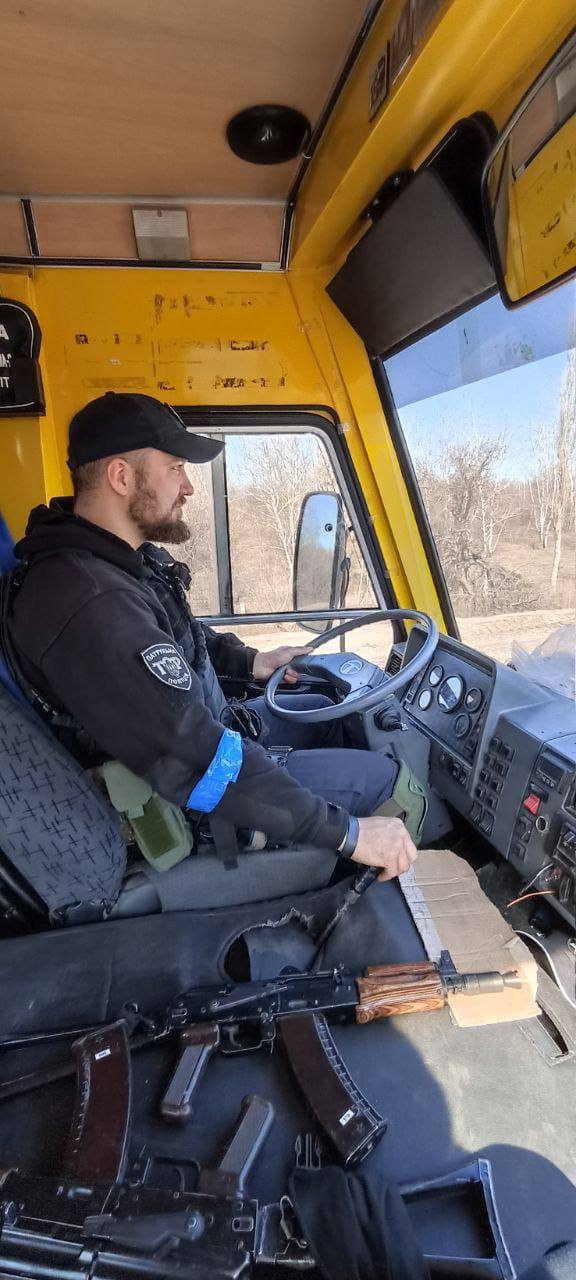
Mykhailo Zharkov
- What challenges are most characteristic of this area?
- The biggest challenge right now is drones. Because the Russians control the roads in our direction with drones, logistics have become very complicated. A lot of things simply don't arrive, and in my work, I don't always have the opportunity to deliver everything I need quickly.
Artillery and guided bombs also remain a serious threat, but with them the situation is more clear: when you hear them flying, you hide, wait for the strike, and then you can move on.
Drones are different. They patrol 24/7 and can appear at any moment. It's not so easy to hide from them. If a drone notices you, it starts hunting. Then all you can do is hope that you can run unnoticed from one cover to another, wait until it has worked its way around the place where it last saw you, and only then continue moving.
- How do you manage to provide a position with everything you need in the face of the constant threat of drones?
- If possible, necessary things are delivered by large drones. Of course, there are cases when they are shot down. However, we manage to deliver minimal supplies - water, fuel, some products. We find some supplies on site. For example, sometimes cereals or beans remain in abandoned houses.
There were periods when they couldn't deliver water for a long time, and we were already thinking about drinking saline. There were also situations when there were problems with food.
Therefore, when entering positions, we always take with us the maximum possible supply. First of all, these are products that take up little space in the backpack and can be stored for a long time: protein bars, dried fillet, tortillas. We must be prepared for the fact that we will have to do without replenishing our supplies for a certain time.
Fortunately, water has become a little easier lately. There are wells near our positions. If necessary, we boil the water or purify it with special tablets.
When we have the opportunity to drive in with equipment, we load the car to the maximum. If we manage to make such a trip at least once a month, we bring in a supply of water, gas cylinders, cereals, pasta, and other products for a long time.
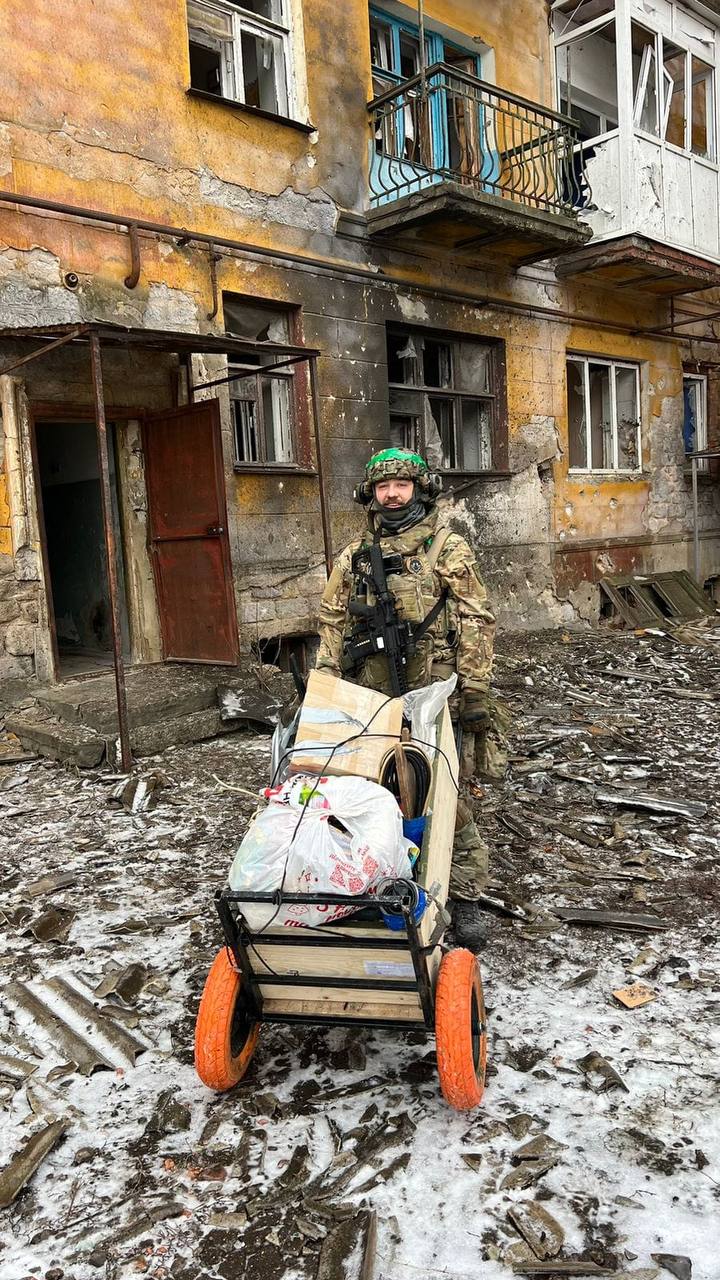
Mykhailo Zharkov
- What is the longest you have ever been in a position continuously?
- We usually stay in position for about 15 days. Personally, the longest I spent there was 18 days.
We were unable to leave at that time due to very high FPV drone activity in our direction. That day, adjacent units also tried to enter, but no vehicle was able to reach the positions, and we, accordingly, were unable to leave.
This is one of the main reasons why sometimes we have to stay there longer than planned. But it's not just about getting out. We have to be replaced, we can't just leave our site.
In addition, getting into a position is usually more difficult than getting out. When entering, people carry a lot of equipment, ammunition, water, and food with them, so they are less mobile. When you exit, you move much more easily.
- What equipment or technology does your unit lack most today for effective work?
- If we talk about what we lack most, it is primarily a ground robotic complex (GRC), a portable ultrasound device for conducting eFAST examinations, and a condition monitoring device.
The NRC would greatly facilitate logistics and allow for safer delivery of necessary supplies to positions. A portable ultrasound machine with the ability to conduct eFAST examinations would help to detect internal bleeding more quickly and make decisions about further assistance and evacuation of the wounded more quickly. And a condition monitoring device would provide the ability to continuously monitor the vital signs of the wounded.
At the same time, I can't say that we have any critical shortages. The commanders are great in this regard - they do a very good job of providing the unit.
- What decisions do you most often have to make in just a matter of seconds?
- If we talk about medicine specifically, then, fortunately, I have not yet had to find myself in a situation where I had to choose in seconds who to help and who not to help. We work according to clear algorithms that are refined to the point of automatism. That is why at a critical moment you do not hesitate, but simply do what you have to do.
Instead, the most difficult decisions often involve movement, especially when you realize that an FPV drone has started chasing the group.
When you are alone, it is one responsibility. But when there is a team nearby for which you are responsible, the price of a mistake is much higher. In such moments, you need to instantly assess the situation and decide: start moving or stay in cover.
At the same time, waiting is not always safer. If the enemy has already detected you, he will work on that very spot. Therefore, you need to catch the right moment between attacks, change position imperceptibly and make sure that the drone does not see where you have moved.
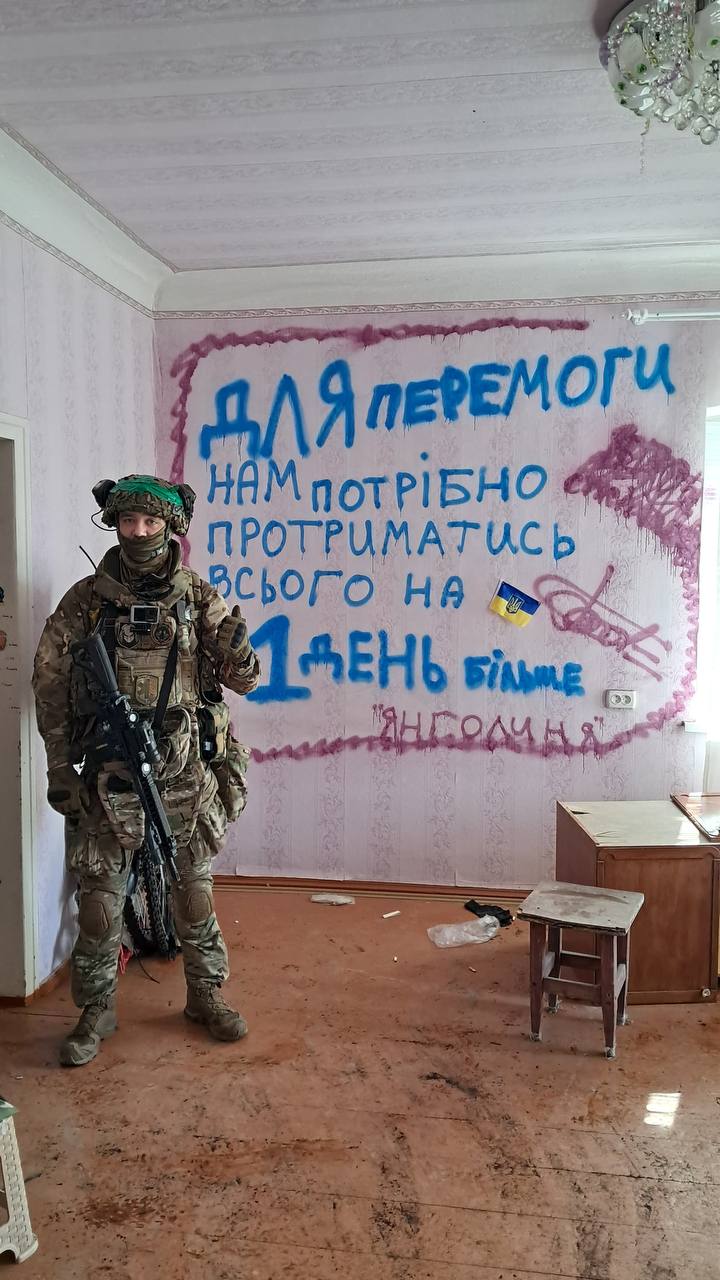
Mykhailo Zharkov
- What mistakes are most often made by the wounded or their comrades before the arrival of the medics? Which of them can have fatal consequences?
- Probably one of the most common mistakes is to apply a tourniquet without critical bleeding or to do it incorrectly. If the evacuation lasts a long time, more than three hours, there is a high risk of losing a limb. Quite often, the tourniquet is applied too high or without sufficient indications.
Another common mistake is not taking antibiotics immediately after a penetrating wound. This is especially critical if evacuation may be delayed. Delay increases the risk of developing infectious complications, including sepsis.
That is why we recommend taking the Pill Pack, which includes an antibiotic, as soon as possible, and then acting according to the first aid algorithm. Therefore, each fighter should have at least three Pill Packs with them.
After applying a tourniquet, it is important to cut the clothing below the application site, locate the source of bleeding, apply packing to the wound, and, if safe and appropriate, gradually remove the tourniquet. This may help save the limb.
It is also common for the tourniquet to be applied too loosely. It may appear that the bleeding has stopped, but in reality the blood continues to flow into the boot or under the clothing, and this is simply not visible. That is why it is necessary to check the effectiveness of the applied tourniquet.
In addition, it is important not to forget about a quick chest examination and performing other basic actions according to the first aid algorithm.
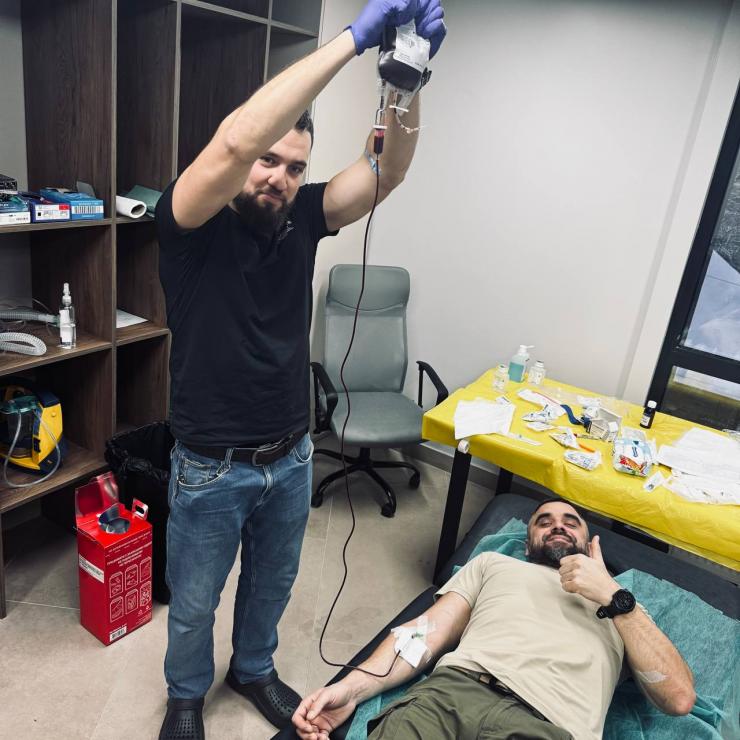
Mykhailo Zharkov
- Has the military's attitude towards tactical medicine changed over the years of full-scale war? Do you feel that today's soldiers are better prepared and more often able to provide assistance to themselves or their comrades before the arrival of medics?
- Yes, a lot has changed. Behind this is the enormous work of instructors and tactical medicine specialists. The level of military training today is much higher than it was at the beginning of a full-scale war.
More and more soldiers are learning how to properly perform tourniquet conversion, wound packing, and other actions that help save lives and preserve limbs.
It's nice to see the military paying attention to even such details as checking the peripheral pulse after applying a tourniquet to ensure it is working effectively. This used to be more of an exception than a rule, but is now increasingly becoming the norm.
If we compare 2022 and 2026, these are actually two different levels of training – both among the military and among the police. The progress is enormous, and it is truly very gratifying.
- What basic first aid skills do you think civilians should master?
- First of all, everyone should be able to stop critical bleeding. This applies to injuries to the limbs, neck, groin, and armpits. Massive bleeding is one of the main causes of rapid death, and timely assistance can save a person's life.
It is also very important to be able to ensure a clear airway. Sometimes it is enough to tilt the head correctly or push the lower jaw forward so that the tongue does not block the airway. If a person has stopped breathing, these simple actions can help restore breathing before the start of cardiopulmonary resuscitation or the arrival of an emergency medical team.
In general, I recommend everyone to take a full CLS course. Such courses are held in many cities of Ukraine, they don't cost all the money in the world, and the knowledge a person receives there may one day save someone's life.
In my opinion, today, in a war situation, everyone should have these skills.
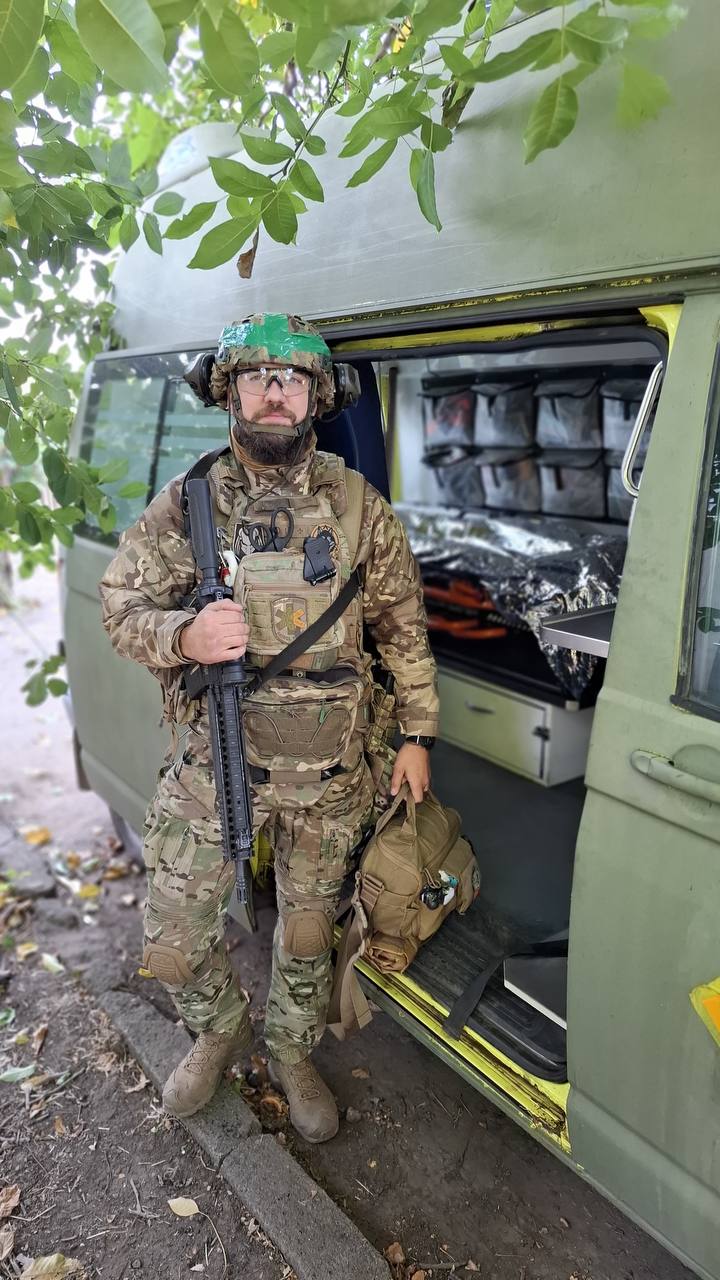
Mykhailo Zharkov
- During the service, there is no time for emotions. And when does the opportunity arise to experience them? How do you recover after particularly difficult cases?
- Family, sleep and the motorcycle help me the most. My wife always supports me, and that is very important.
There were times when I couldn't save a person, and I blamed myself for doing something wrong...
When I have the opportunity, I get on my motorcycle and go for a ride – it helps to clear my head a little. Sleep also helps a lot.
But in general, I try not to dwell on work situations endlessly and not to overthink them. It doesn't make anyone better. Instead, I draw conclusions from each case and try not to repeat possible mistakes in the future.
- Mr. Mykhailo, is there a story that has changed you the most as a person?
- I can't remember a single situation that radically changed me during my service as a combat medic.
But I can say for sure that I have changed since the first day of the full-scale invasion.
It was then that I realized that life would never be the same again. Since then, I have lived in constant tension: all my senses are heightened to the limit, and my instincts are working at their maximum. And it continues to this day.
The police service was formally a "green zone," but even there we were constantly under fire. We repeatedly had to pull the bodies of civilians from under the rubble — adults and children who, just a few minutes ago, were just sitting and having dinner, not even suspecting that their lives were about to end.
When you constantly live in this mode, over time it becomes very difficult to surprise someone with something or radically change your worldview.
Marta Netiuhailo