

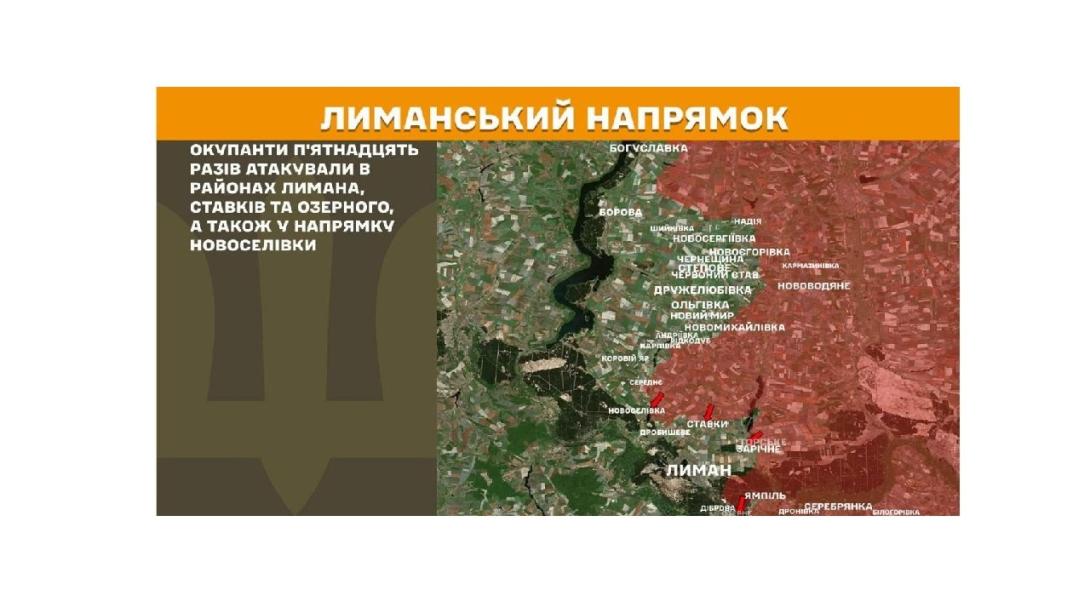
"The Russians shelled our positions in the Luhansk region 36 times. For the attacks, the enemy used barrel artillery, delivering ten hits, and also carried out five mortar attacks, used six FPV drones, and dropped explosives from drones 15 times. In the Lyman direction, 15 attempts by the occupiers to penetrate the Ukrainian defense were repelled," said Oleksiy Kharchenko, head of the Luhansk Regional State Administration.
The so-called “LPR” authorities have expanded the mechanism for appropriating the property of Ukrainian citizens by adopting amendments to the local law on “ownerless housing”. From now on, not only abandoned apartments will be subject to confiscation, but also all movable property inside, including furniture, household appliances and other personal belongings. According to the new rules, during the forced opening of empty apartments, representatives of the occupying municipalities, together with the police, will conduct an inventory of the property and transfer it to communal ownership. In the future, such housing, along with other people’s furniture and appliances, is planned to be given to other people who are on the apartment register, placing responsibility for the safety of these things on the new residents. The innovations actually legalize large-scale looting in the temporarily occupied territories of Luhansk region under the guise of official municipal procedures.
The occupation authorities' statements about more than 55 thousand applications submitted by applicants to educational institutions of the "LPR" are a blatant manipulation that directly contradicts the real demographic situation. Before the war, the total number of students in all universities of the region was about 50 thousand people, and since then more than 600 thousand people have been forced to leave the region, primarily young people and parents with children. Therefore, the declared indicators of the admission campaign look completely unrealistic. Russian propagandists are trying to support the artificial illusion of the flourishing of the so-called "young republic".