

Work is underway to have communities in Luhansk Region enter data into the State Register of Property Damaged and Destroyed as a Result of Hostilities, Terrorist Acts, and Sabotage Caused by the Military Aggression of the Russian Federation (RPZM).
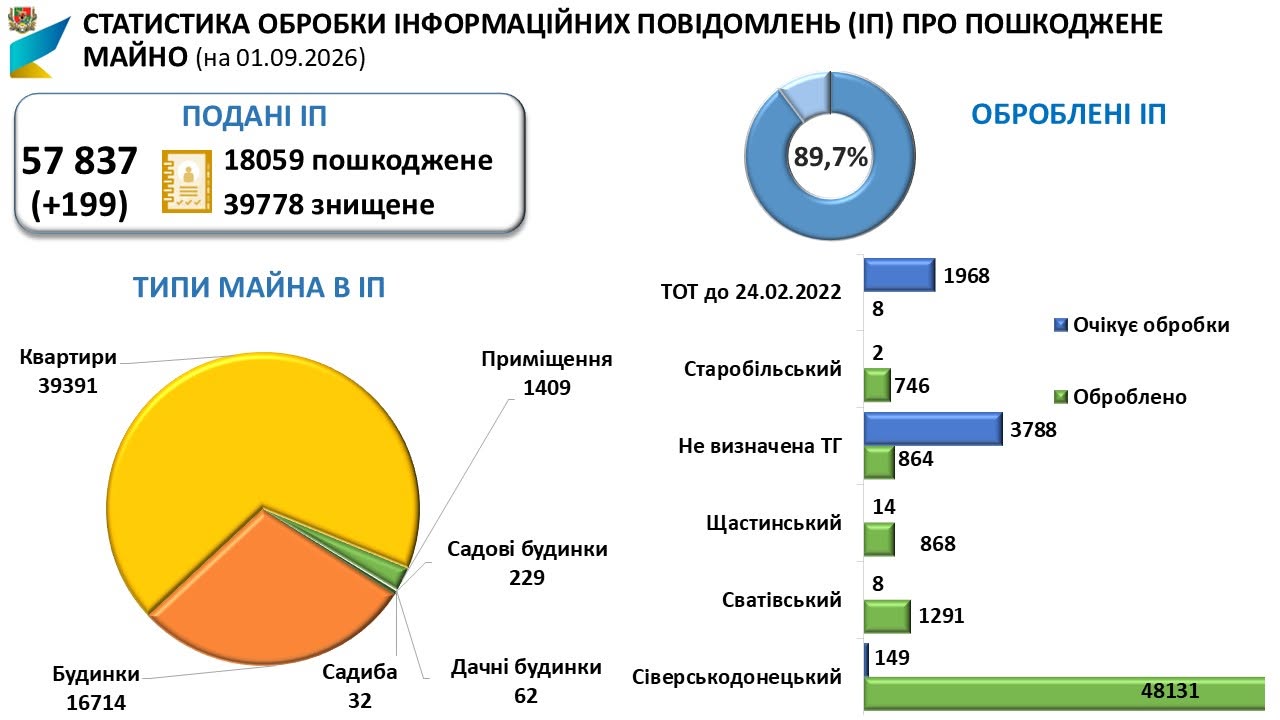
The Department of Economics and Support for Relocated Enterprises of the Luhansk Regional State Administration informs that as of September 1, 2026, citizens of the region submitted 57,837 information reports (IRs) (+199 IRs compared to August 1, 2026) about damaged/destroyed real estate.
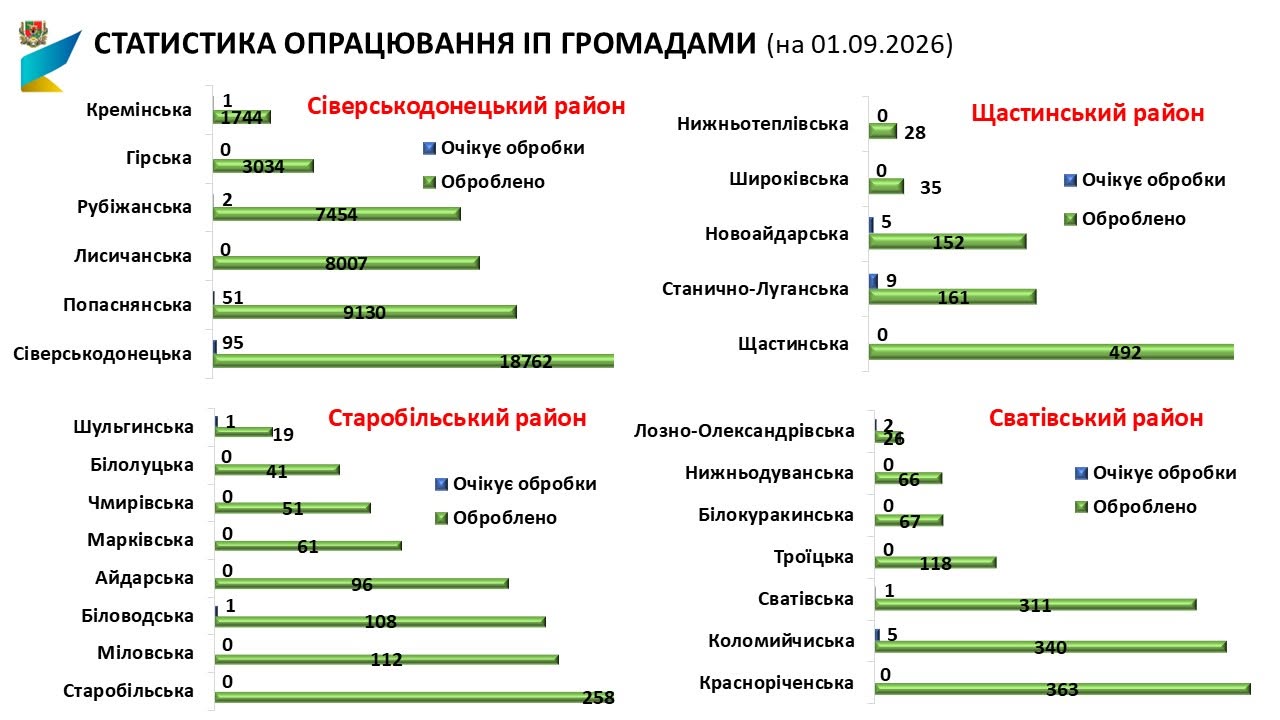
 Military administrations of territorial communities processed 51,908 individual entrepreneurs (+125 individual entrepreneurs compared to 01.08.2026). Of these:
 data provided by citizens in 38710 individual entrepreneurs were entered into the State Register of Property Damaged and Destroyed as a Result of Hostilities, Terrorist Acts, and Sabotage Caused by Military Aggression of the Russian Federation (RPZM).
 13198 IPs cannot be processed (due to duplication, incorrect data, in particular regarding the address, property owner, etc.)
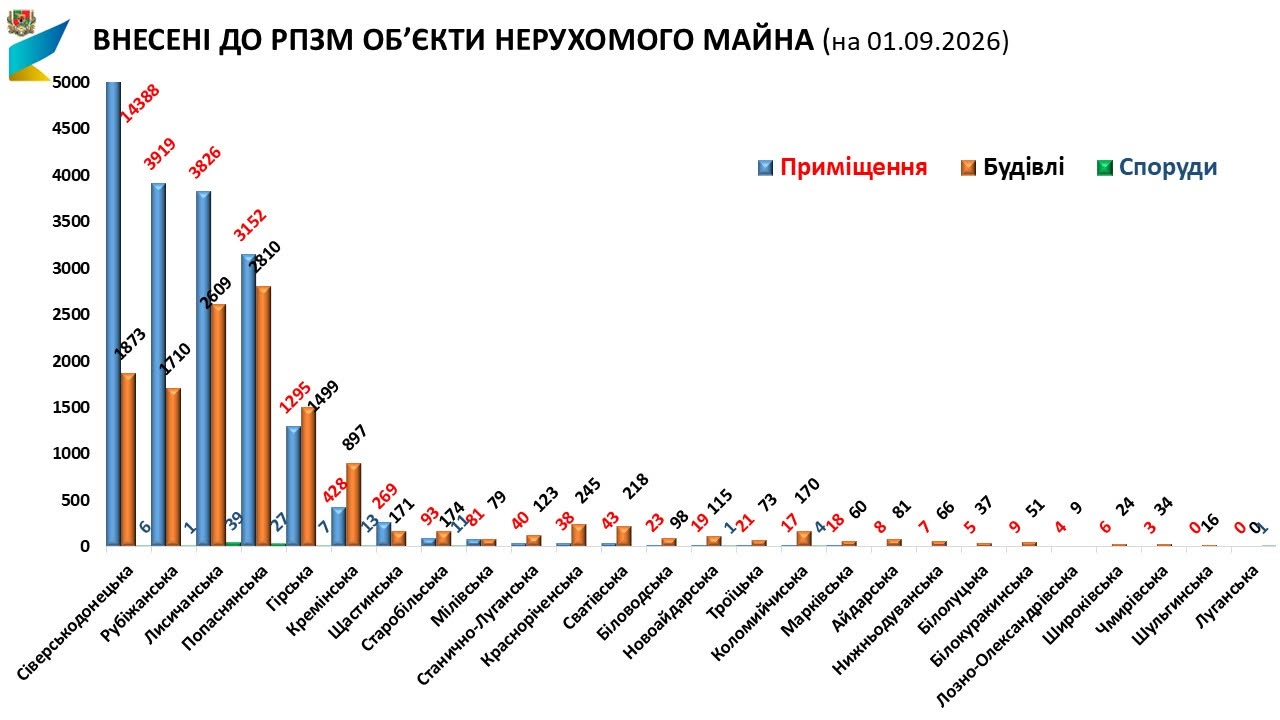
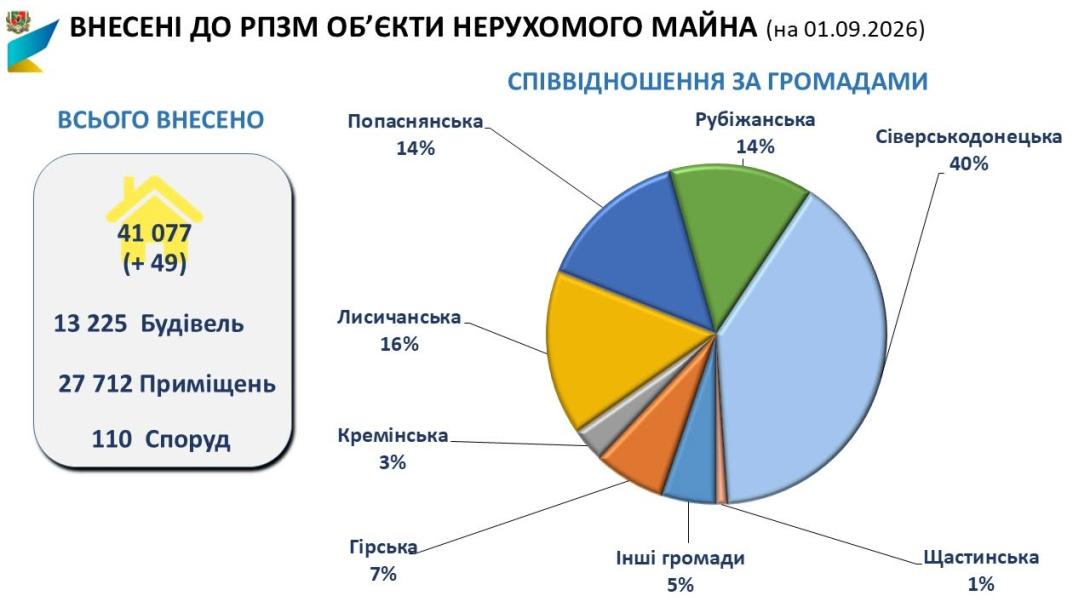
 A total of 41,077 real estate objects (REOs) were included in the RPZM (+49 REOs compared to 08/01/2026), including 13,225 buildings, 27,712 premises, and 110 structures.
In the Siverskodonetsk urban territorial community, 18,762 IPs were processed. 14,388 premises and 1,873 buildings were included in the RPZM.
We remind you:
- currently, owners of property located in the territory of Luhansk region cannot receive assistance for its restoration or compensation in case of its destruction. However, it should be taken into account that only the availability of data on damaged or destroyed property in the RPZM will enable the owner to receive such assistance in the future;
- you can submit an IP through the Unified State Electronic Services Web Portal, using the Diia Portal mobile application, or through the administrator of the administrative services center or a notary;
-correct and as complete as possible information provided by you in the IP will significantly speed up its processing;
-if you have already submitted an IP with correct data, you do not need to submit it again - this will only slow down the processing of other IPs.