
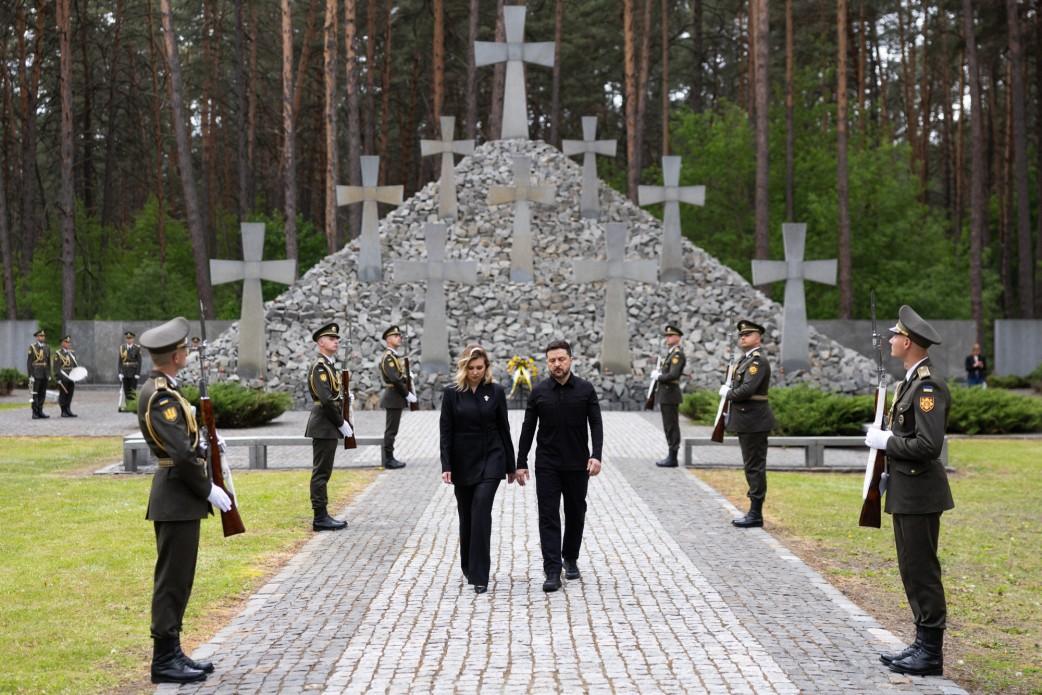
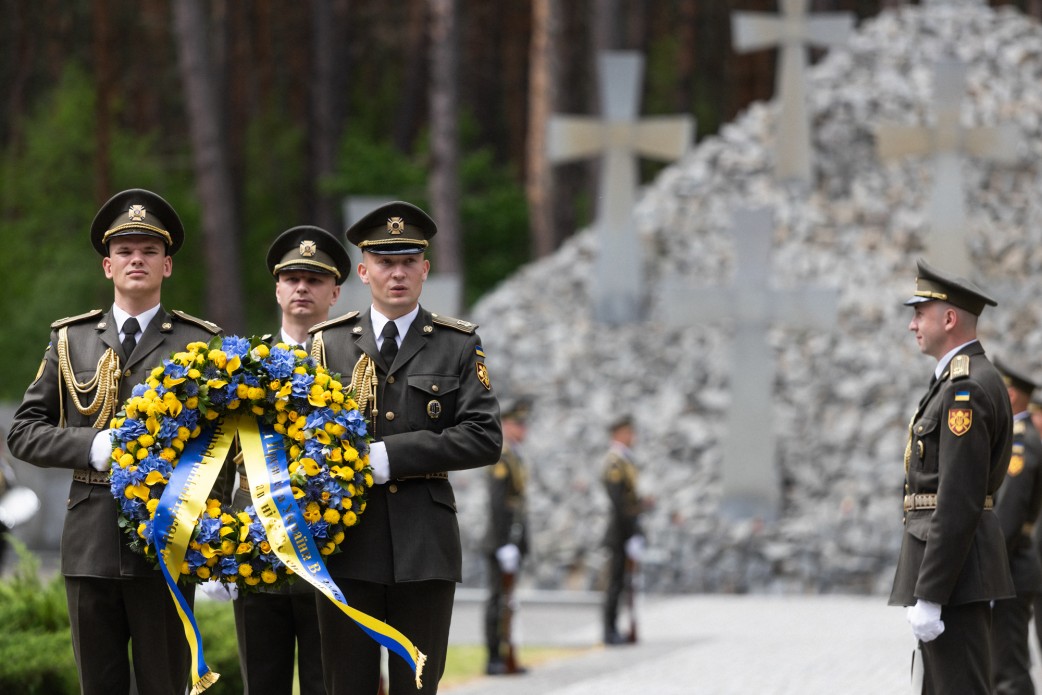
On the Day of Remembrance of Victims of Political Repression, President of Ukraine Volodymyr Zelenskyy and First Lady Olena Zelenska honored the dead at the National Historical and Memorial Reserve "Bykivnyanski mohyly".
Volodymyr and Olena Zelensky also laid flowers at the memorial sign of Polish burials.
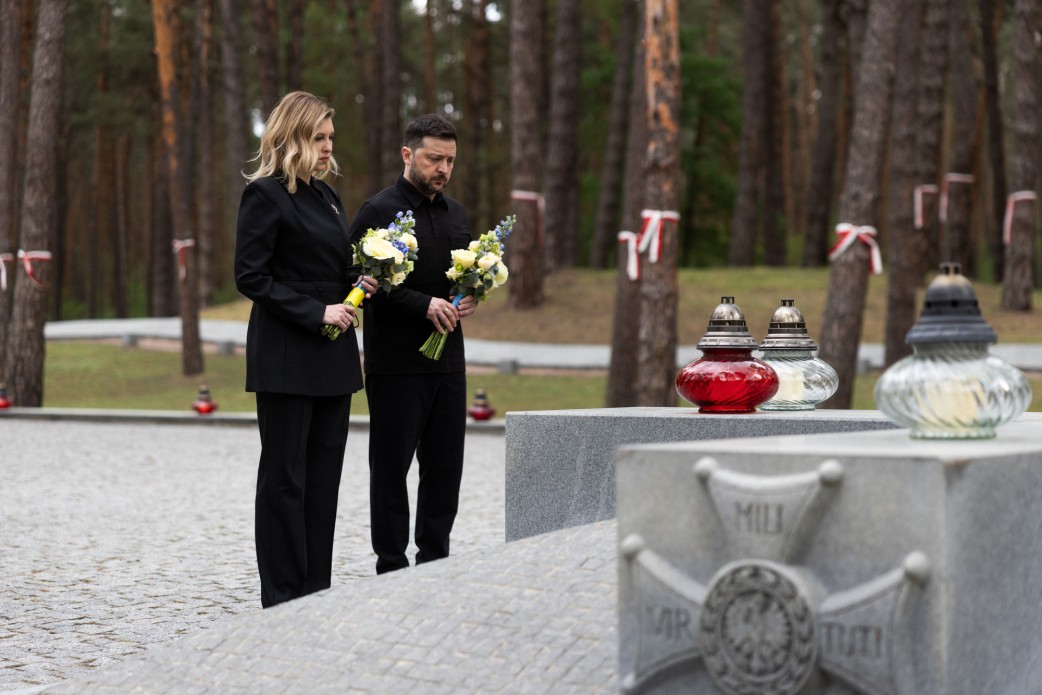
"Now, when thousands of our people – prisoners of war and civilian prisoners – remain in Russian captivity and are going through the same trials, it is important not to forget this. It is necessary to make the necessary efforts at all levels to return each and every one. And it is imperative that justice be served and criminals be held accountable for their actions. The free world has enough strength to ensure this," the President and First Lady noted on social networks.
During 1937–1941, victims of political repressions were secretly buried in the Bykivnya Forest, who were shot by the NKVD in Kyiv prisons. This is the largest burial place in Ukraine for victims of mass political repressions. During the Great Terror period (1937–1938) alone, almost 200,000 people were sentenced, of whom about two-thirds were shot. According to rough estimates by historians and researchers, at least 30–35,000 people are buried at this place. Among them, in particular, are the writers Mykhailo Semenko and Mike Johansen, the artist Mykhailo Boychuk, and the church figure Vasyl Lypkivskyi. Over 3,500 foreigners are also buried in Bykivnya - representatives of over 30 nationalities, among whom the largest number are citizens of Poland and Germany.
The truth about Bykivnia first became known after the Nazi occupation of Kyiv in September 1941. In Soviet times, information about Bykivnia was kept under the “Top Secret” label in the archives of the secret services. In the early 1960s, members of the “Club of Creative Youth” in Kyiv unofficially collected materials about the repressions. Among them were Les Taniuk, as well as Alla Horska and Vasyl Symonenko, who were killed. Only in 1988 was it officially recognized that victims of Stalinist repressions were buried in this forest.
In May 2001, the Cabinet of Ministers adopted a resolution to establish the State Historical and Memorial Reserve "Bykivnyanski mohyly". That same year, it was visited by Pope John Paul II.