


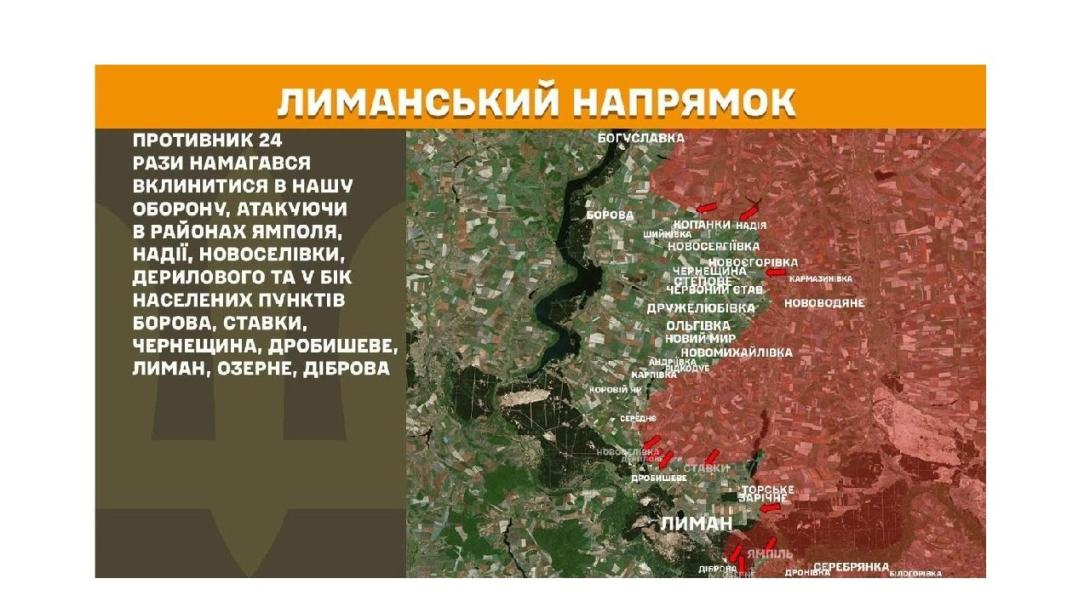
"During the day, Russian troops shelled frontline communities in Luhansk region 38 times. The enemy was most active in using drones, carrying out 21 attacks using FPV drones and dropping from UAVs, as well as delivering five strikes each from mortars, artillery and automatic grenade launchers, and twice using other types of weapons. In the Lyman direction, the enemy attacked 24 times, in particular near the village of Nadiya, Svativsky district," said Oleksiy Kharchenko, head of the Luhansk regional state administration.
The socio-economic situation in Luhansk is rapidly deteriorating due to the prolonged fuel crisis: the price of gasoline at local gas stations has almost doubled. Citizens' fears of further inflationary processes are justified against the background of the general decline in the exchange rate. The situation is complicated by the shortage of foreign currency in the city's financial institutions, which is why residents are forced to urgently invest depreciated funds in long-term storage products and basic necessities. In addition to economic factors, a significant factor of concern remains the high risks of renewed forced mobilization into the ranks of the occupation forces. Local families are forced to prepare for a prolonged crisis and express deep distrust of the statements and promises of the occupiers.
Residents of Alchevsk continue to report critically low quality tap water, which comes to their homes with impurities of black sand and garbage. According to local residents, dangerous sediment instantly collects on dishes and plumbing, making the water unsuitable even for technical use. The situation is another evidence of the communal crisis in the region, where a stable water supply has long become a rare luxury. Despite regular complaints from the population, the occupation administration continues to completely ignore the problem: no effective measures have been taken to clean the networks or restore the neglected infrastructure.