
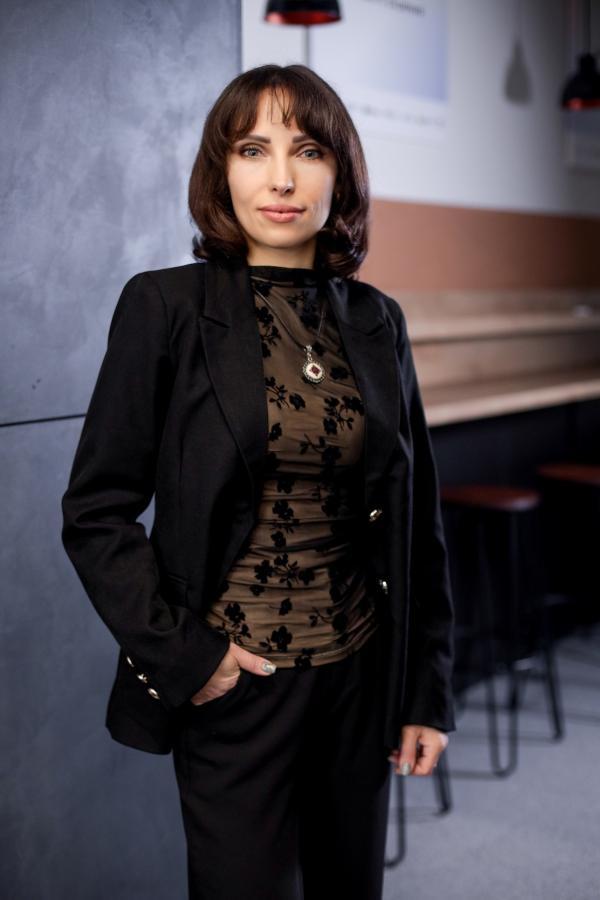
Oksana Lunyova is the secretariat of the coalition “Luhansk Region. Women. Peace. Security”. Since 2018, she has been ensuring systematic interaction between the public sector and authorities in implementing the Agenda “Women, Peace, Security” at the regional level. During this time, she has initiated and implemented a number of projects within the framework of the Regional Action Plan 1325 - in the areas of advocacy, awareness-raising and capacity-building of specialists.
Ms. Oksana is actively involved in monitoring the implementation of the Regional Plan and preparing recommendations for its strengthening. She collaborates with partner organizations, regional government structures and specialized institutions to ensure that the principles of the Women, Peace, Security Agenda are not a formality, but part of real regional policy. Her activities are aimed at increasing the visibility of the role of women in peacebuilding, security and community reconstruction processes.
— The coalition "Luhansk Region. Women. Peace. Security" was created in 2018. It included representatives of the Department of Social Protection of the Population, the Patrol Police Department, public organizations and initiative groups. Our goal was to join forces so that the National Action Plan for the Implementation of UN Security Council Resolution 1325 would actually work at the regional level. So that the principles of equality, security and participation of women would be implemented in communities, — explains Ms. Lunyova.
Over the years, the coalition has systematically implemented the Women, Peace, Security Agenda through projects that empower women, especially those affected by war. Coalition members actively participate in the development and monitoring of the 1325 Regional Action Plan.
— We work with local authorities, conduct advocacy campaigns, disseminate information among community residents, explain why it is important, and train professionals who work on the ground.
A separate area of activity is supporting women's participation in decision-making. In Luhansk region, many women are changing their communities, but they often do not know enough about their work.
— Our task is to make their role more visible and show that women can and should influence the processes of recovery and peacebuilding.
According to Ms. Oksana, over the years it has become obvious: Resolution 1325 is not an abstract international document.
— This is a practical tool that can be adapted to the needs of the region. And when it happens together — with the participation of the authorities and the public — changes become real.
Since 2018, the coalition has changed both quantitatively and qualitatively. While initially it was a small association of like-minded people, today it is a recognizable expert platform.
— We have become more professional and systematic. People turn to us for consultations, analytics, and advice on implementing the Agenda in practice. We have managed to establish cooperation with other regional coalitions, exchange experiences, and jointly promote the Women, Peace, and Security Agenda at both the regional and national levels.
Coalition members are constantly improving their skills — participating in training, forums, and meetings. They not only represent the Luhansk region, but also voice the region's problems at various levels so that the interests of communities are heard.
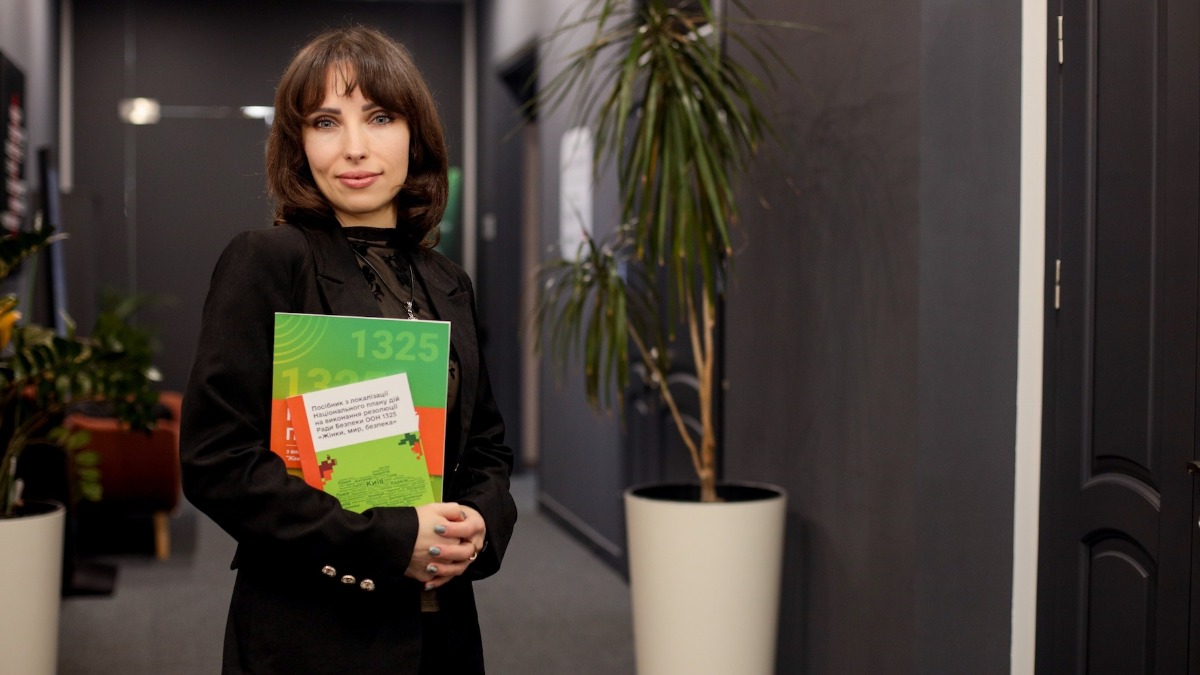
Ms. Oksana calls one of the coalition's main achievements the fact that it has survived and continues to work despite the war and the global relocation of its participants.
— Even despite the war, dispersion throughout Ukraine and beyond, the coalition has not stopped its activities. It seems to me that these challenges have united us even more and made us stronger. We continue to implement projects to implement the Regional Action Plan, support women and internally displaced persons, and work to ensure that women have more opportunities to influence decisions in their communities. And very importantly, we have maintained partnerships with the authorities and other organizations.
Monitoring the Regional Action Plan is another important tool. And it is not formal reporting.
— Monitoring allows us to see what is working, where there are gaps, which groups are underserved, which tools need to be strengthened. Most importantly, the results of monitoring become the basis for subsequent planning. It is a mechanism for continuous improvement. Without it, the document can remain on paper, and it is important for us that it is a living tool for change.
Ms. Oksana calls the partnership between the authorities and the public a separate factor of success. The coalition has been cooperating with the Regional Military Administration since 2018.
— For us, the regional military administration is a strategic partner. It helps with coordination, identifying the needs of internally displaced persons, and setting priorities. The public can respond quickly to challenges, has trust in communities, and directly implements projects.
Thanks to this collaboration, it was possible to create safe spaces for women, men, boys and girls, conduct activities on psychosocial support, security, home medical care, etc.
— The main strength is in synergy. When the government and the public do not compete, but complement each other, assistance becomes more targeted, effective, and of higher quality.
In a strategic perspective, the coalition sees its task as further strengthening as a strong platform where the government and the public jointly make decisions and influence policy.
— We plan to develop support centers, expand services, and strengthen women's economic empowerment. It is important to us that people have not only support, but also real tools of influence. The Ukrainian Women's Fund remains an important partner — together we implement projects on gender equality, combating violence, and implementing the Regional Action Plan 1325. In a strategic perspective, we see a region where the Women, Peace, Security Agenda is integrated into local policies, budgets, and development programs. And where women are full participants in decision-making and community restoration.

The material was created in cooperation with the Ukrainian Women's Fund with the support of the governments of Great Britain, the Netherlands and Canada and with the assistance of the Government Commissioner for Gender Policy