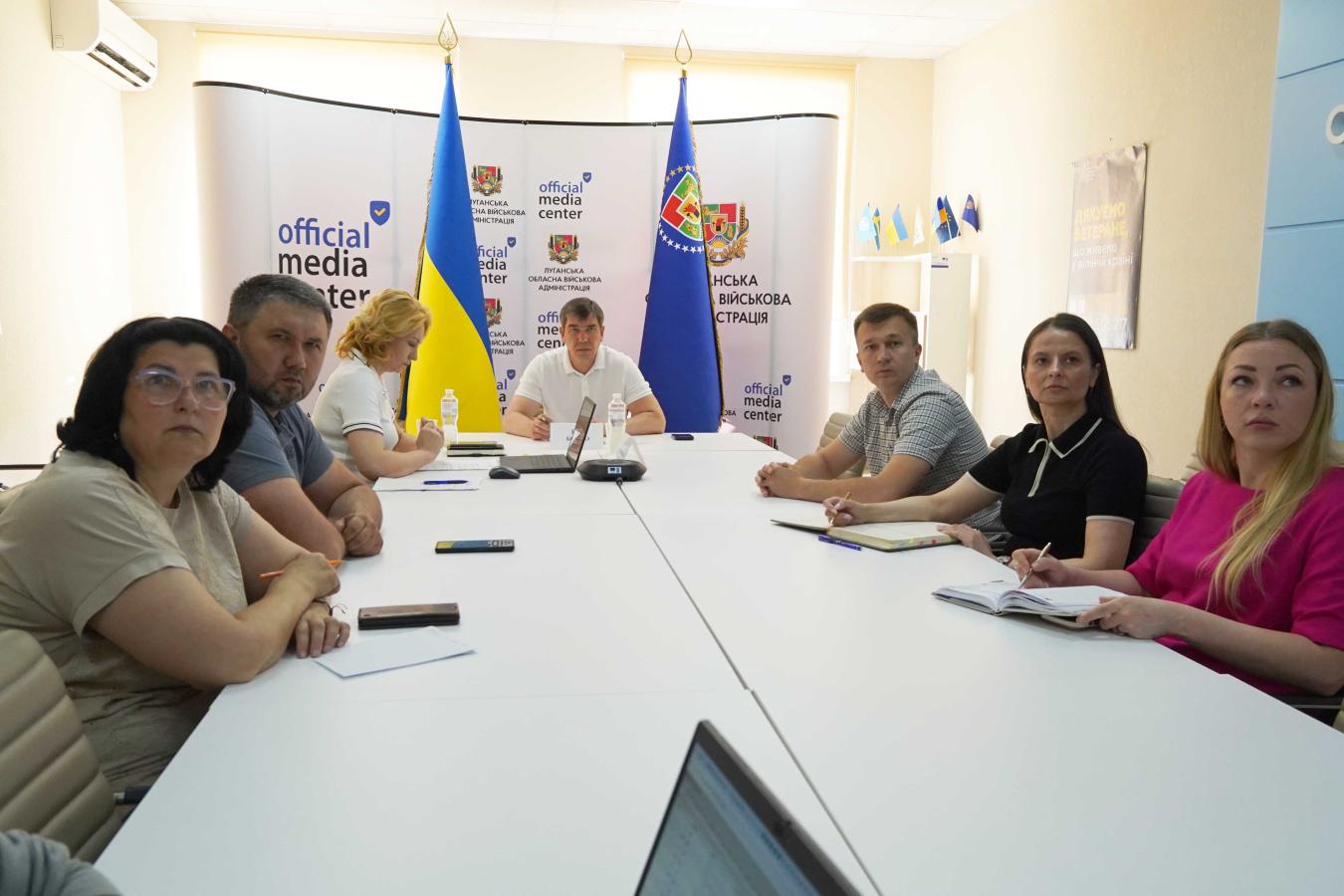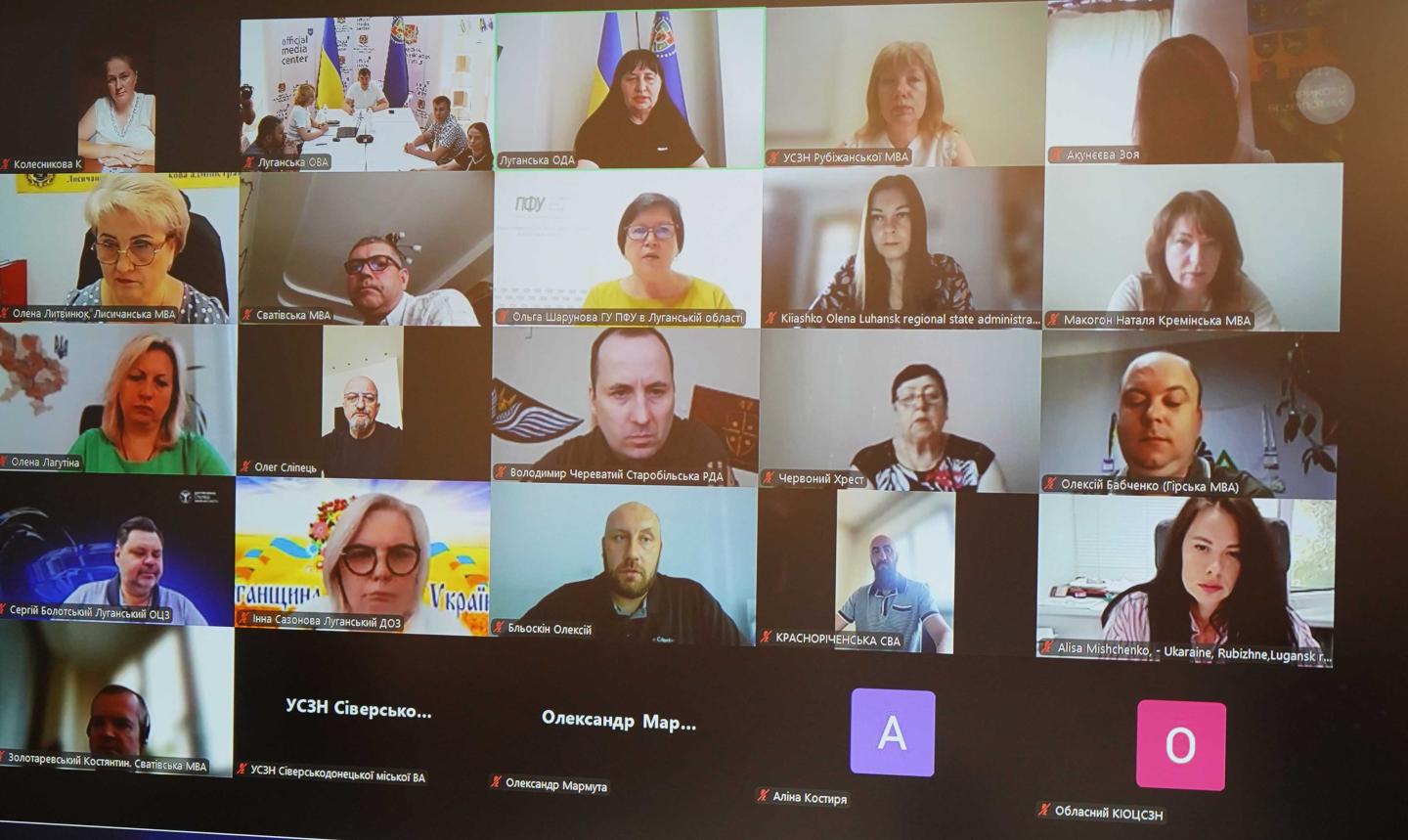

A meeting of the Coordination Center for Civilian Support under the Luhansk Regional State Administration was held.
The event was attended by the First Deputy Head of the Regional State Administration, Ivan Bochko.
The meeting was held by Kateryna Bezginska, Deputy Head of the Regional State Administration, Head of the Coordination Center.
Also present was the Director of the Department of Education, Culture, Youth and Sports, Oleksiy Blyoskin.
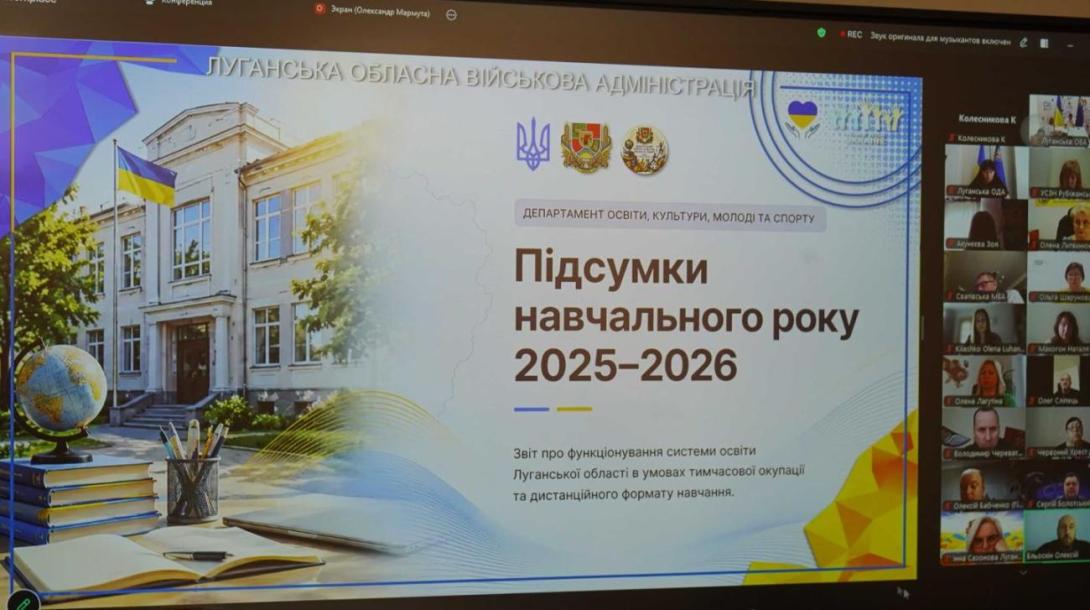
The meeting discussed the results of the end of the 2025-2026 academic year and the work of the regional Coordination Centers.
The heads and deputies of the Hirska CMA, Kreminska CMA, Lysychanska CMA, Popasnyanska CMA, Rubizhanska CMA, and Siverskodonetsk CMA reported on the results in their communities.
The academic year in educational institutions of the Luhansk region ended in extremely difficult conditions of martial law and prolonged temporary occupation of some territories, however, the regional education system demonstrated a high level of resilience. Despite the forced dispersion of participants in the educational process and serious security challenges, institutions ensured the continuity of mainly distance learning, adapted programs and provided the necessary support to students and teachers.
In total, educational services were provided by 78 secondary education institutions, among which only the Luhansk Regional Lyceum with Enhanced Military and Physical Training operated in a full-time format. As of early June, over 16,000 students were studying in the region's schools, including children with IDP status, students in temporarily occupied territories, and young people forcibly residing abroad.
To maintain the proper quality of the educational process, schools actively implemented modern distance learning forms, digital resources and online platforms, effectively combining synchronous and asynchronous modes of work. A critically important component of success was the improvement of the material and technical base: with the assistance of the Ministry of Education and Science of Ukraine and international partners, educational institutions received over 7 thousand modern devices for students and teaching staff.
Proper organization of the process allowed us to successfully complete the year and issue documents on basic secondary education to more than 1.7 thousand ninth-graders, and certificates of complete general secondary education to more than 1.4 thousand eleventh-graders. At the same time, the region's vocational and professional pre-higher education institutions were fully provided with financial resources for distance training, which made it possible to graduate hundreds of new qualified workers and professional junior bachelors.
A special place in the educational and humanitarian space of the region is occupied by the support of the student youth of the Siverskodonetsk City Military Administration. This year, schoolchildren of the Siverskodonetsk community demonstrated significant intellectual achievements, becoming winners of a number of prestigious all-Ukrainian and international competitions, in particular, the competition-defense of scientific and research works of the Small Academy of Sciences, the International Ukrainian Language Competition named after Petro Yatsyk, and the Taras Shevchenko Language and Literature Competition.
In addition to promoting academic and creative success, the leadership of the territorial communities of the district has focused its efforts on the summer recovery of children. In the Siverskodonetsk district, where there are currently over three thousand school-age children, a large-scale health campaign has been launched, for which local budgets have provided significant funding for the purchase of vacation packages and transportation. The priority area is the recreation of children who need special social attention, internally displaced persons and children of military personnel both in Ukrainian camps and abroad.
Such well-coordinated coordination demonstrates the readiness of the educational and social spheres of Luhansk region to effectively act in the interests of children and ensure their harmonious development despite all the challenges of the war.