

For every community, accessibility should be part of overall development planning. Therefore, it is important to include relevant goals and objectives in the Community Development Strategy.
At the same time, they must comply with the six areas of the National Strategy for Creating a Barrier-Free Space by 2030 and take into account the real needs of people in a specific community.
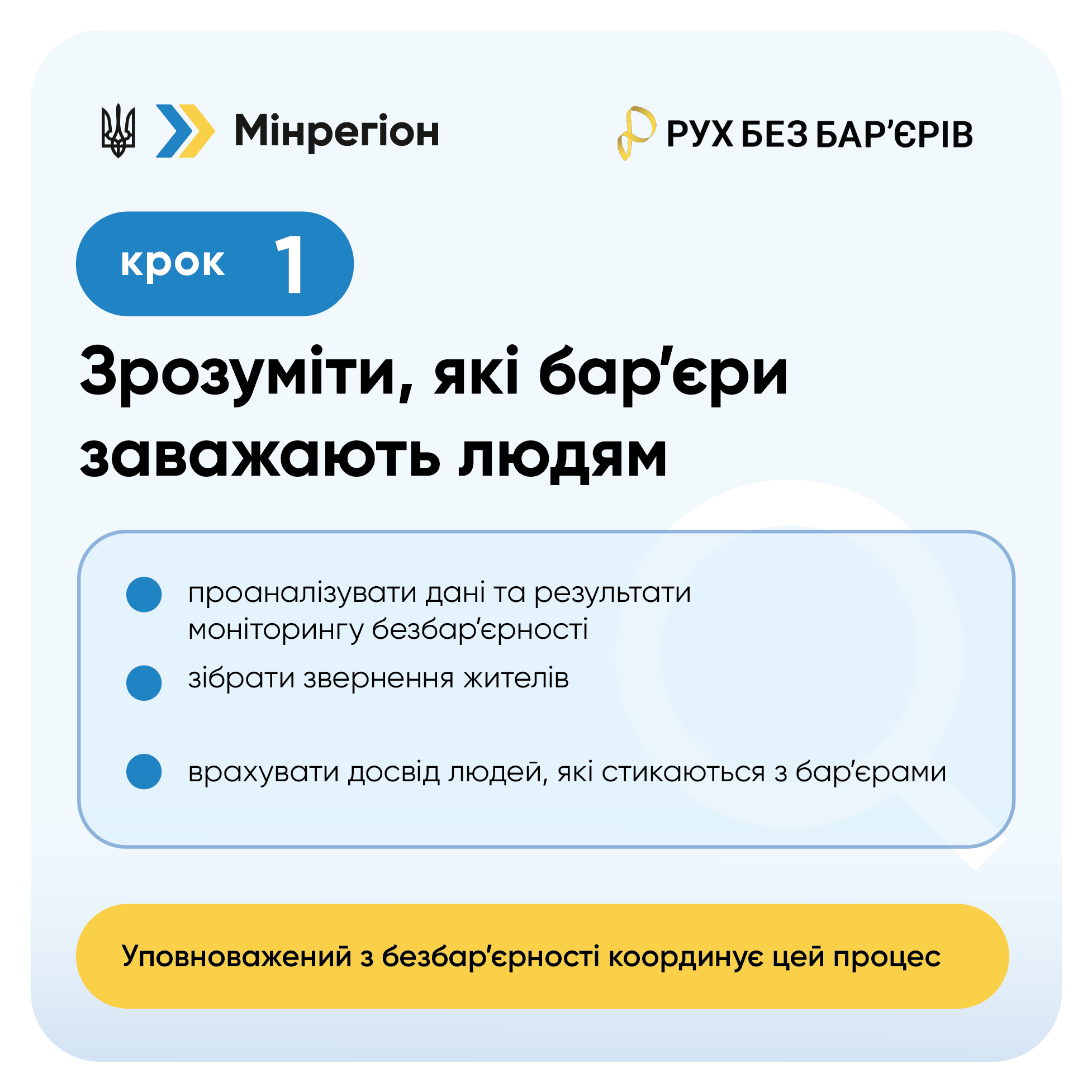
Step 1. Understand what barriers exist in the community
It's worth starting with a simple question: what exactly prevents people from fully using the space, services, and opportunities of the community?
To do this, it is necessary to analyze the results of annual monitoring of barrier-free access, data on the accessibility of infrastructure and services, and residents' requests.
It is important to hear from the people themselves - public organizations, people with disabilities, veterans, older people, parents with young children, and other people who constantly or occasionally face barriers.
The community accessibility officer coordinates this work: collects proposals for the plan and strategy, monitors their implementation, and reports on the results to the Local Accessibility Council.
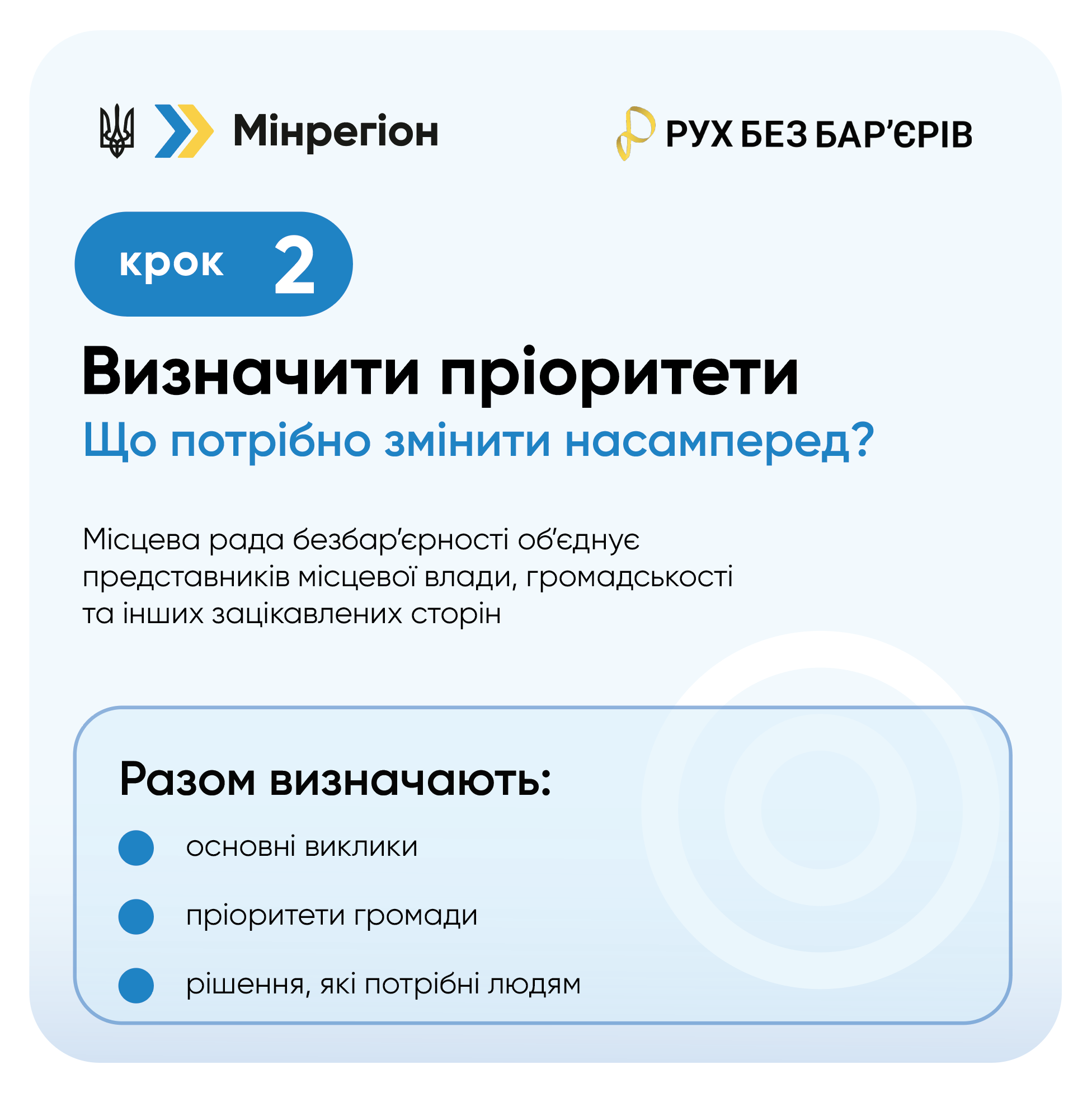
Step 2. Identify priorities with the Local Accessibility Council
The information collected helps the community determine what needs to change first.
The Local Accessibility Council is a platform where representatives of local government, the public, and other stakeholders can together identify key challenges and priorities.
This approach helps to take into account the real needs of people before the community makes a decision.
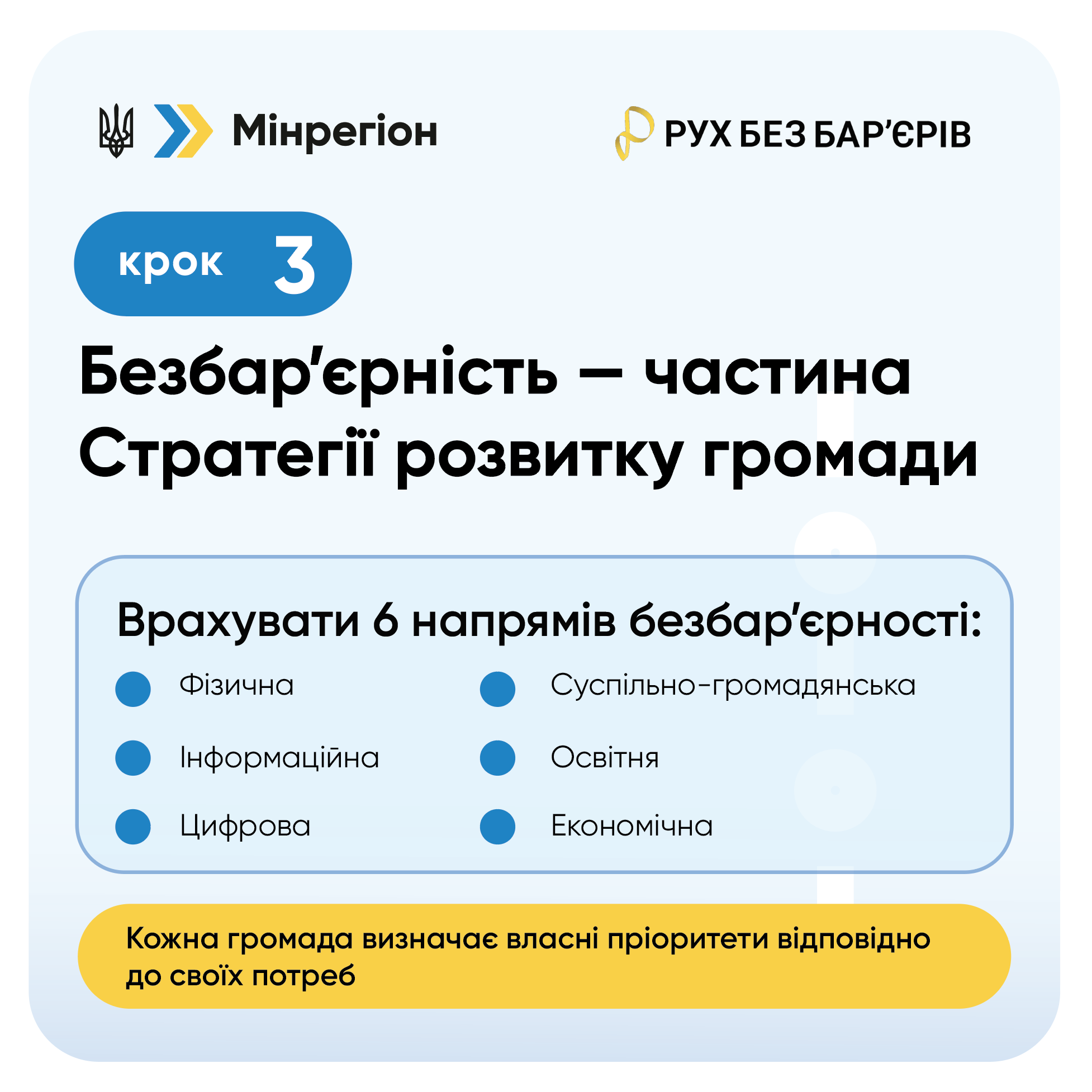
Step 3. Include accessibility in the Community Development Strategy
The goals and objectives for barrier-free access in the Community Development Strategy should correspond to the six areas of the National Strategy:
• physical;
• informational;
• digital;
• social and civil;
• educational;
• economic accessibility.
At the same time, each community determines what to focus on first, depending on its needs and characteristics.
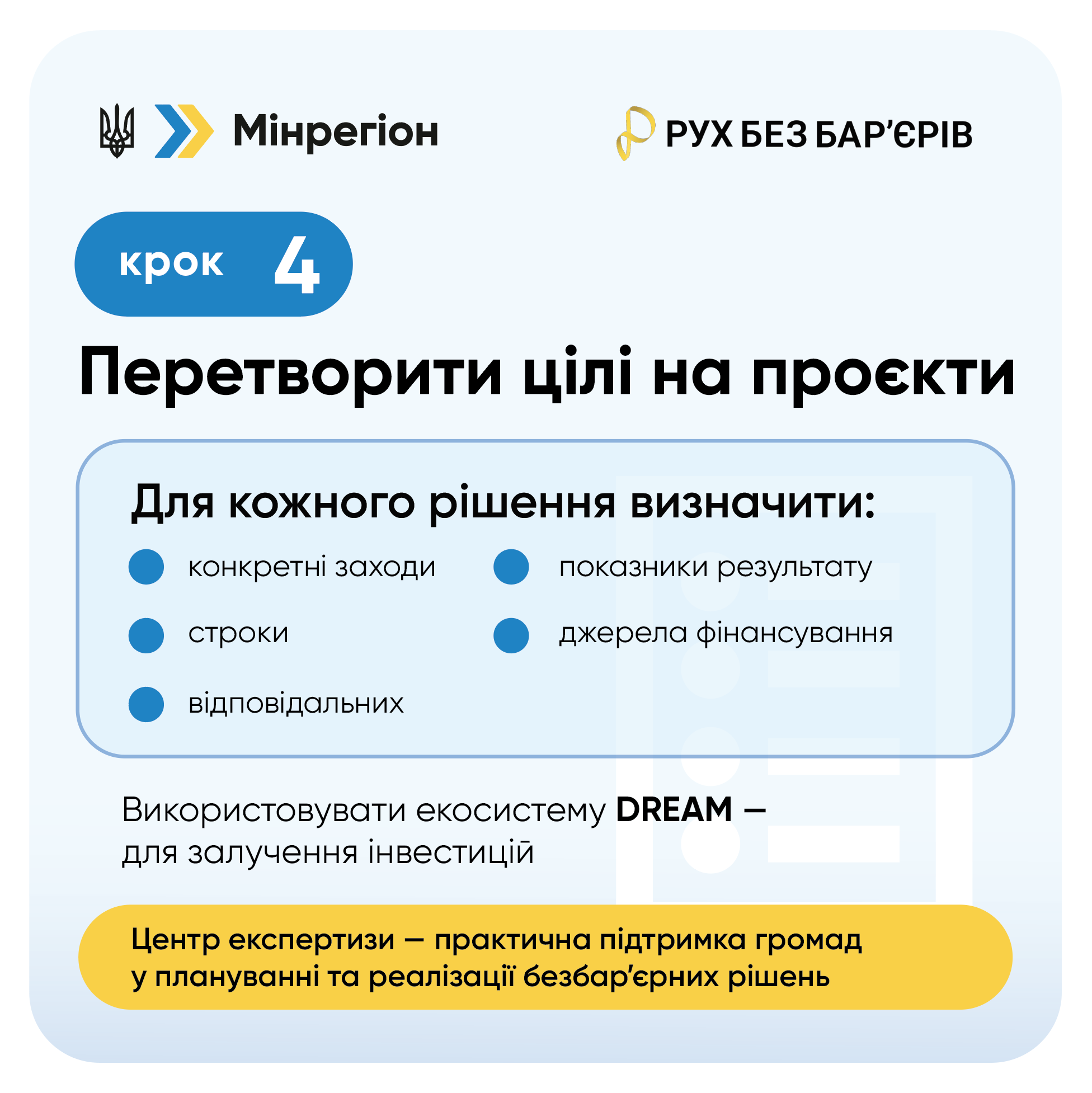
Step 4. Convert goals into specific projects and budget for funds
Each goal should be translated into specific actions: what exactly to do, when, who is responsible, how to measure the result, and sources of funding.
It is important that the Development Strategy, Action Plan, local programs, and budget are interconnected. Then barrier-free access will not remain just a declared goal, but will be transformed into concrete changes.
Communities can use the DREAM ecosystem to attract investment.
Communities can also receive practical support from the Expertise Center, which works based on the experience of the first and second phases of "Movement without Barriers".
The center helps at all stages — from planning and designing barrier-free routes to finding grant opportunities for project implementation.
You can submit a request to the Expertise Center at: barrierfreeroots@gmail.com
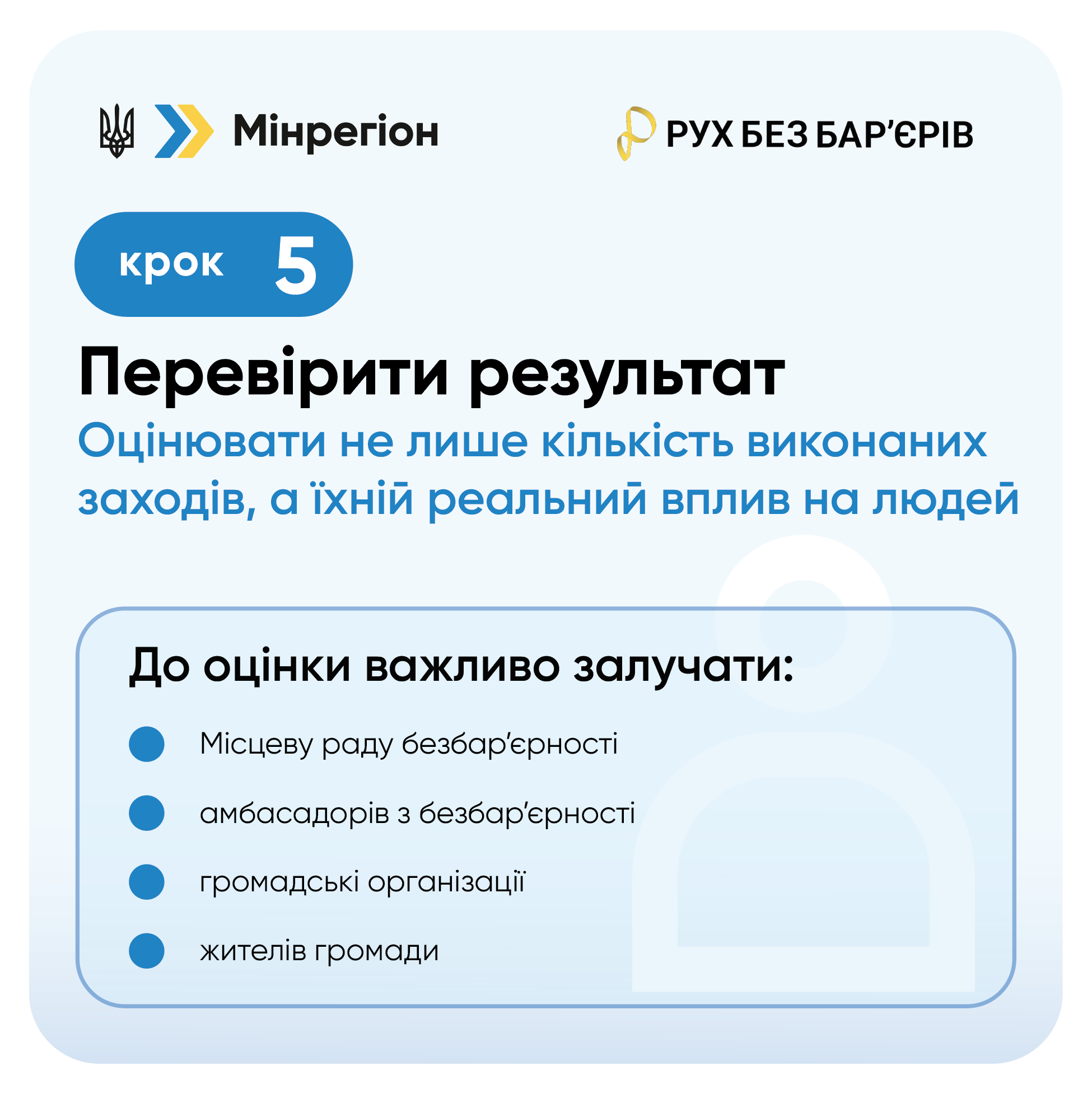
Step 5. Check the result and improve the solution
It is important not just to count how many measures have been implemented, but to check the main thing: whether it has really become easier for people to use the spaces, services, and opportunities of the community.
The Local Accessibility Council, accessibility ambassadors, public organizations, and residents themselves should be involved in evaluating the results.
If monitoring reveals new challenges or that a particular solution is not working properly, the community can update its priorities and activities.