
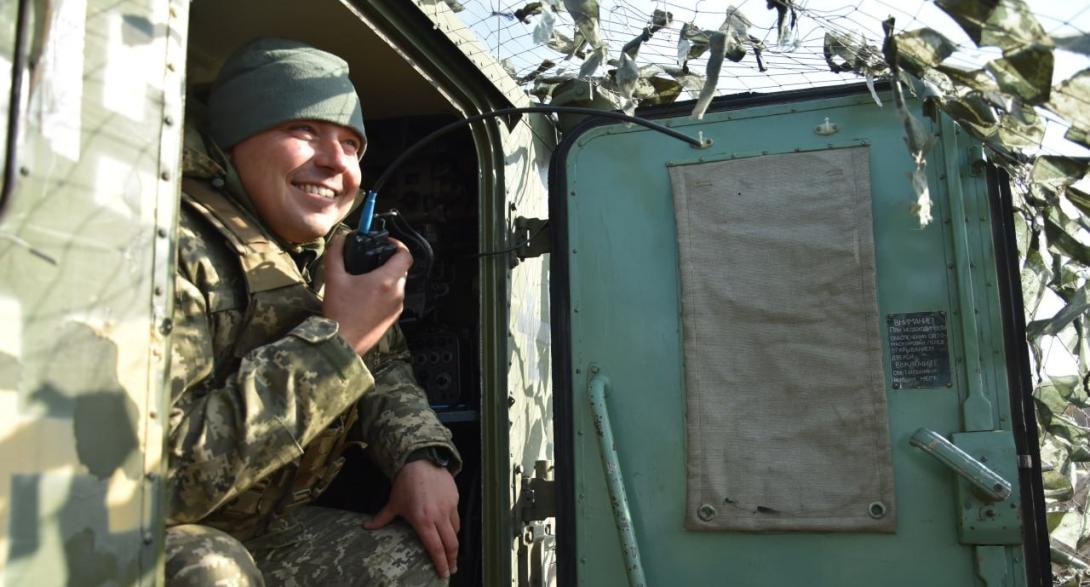
The commander of the artillery division of the 55th separate artillery brigade "Zaporizhzhya Sich" with the call sign "Brooklyn" is originally from Siverskodonetsk. For him, this city is not just a point on the map, but a home with which childhood, family and the warmest memories are connected. In 2014, the soldier participated in the liberation of his hometown, and today he continues the fight for the return of Luhansk region.
In an interview with SD.UA, he spoke about his journey in the army, his combat experience, and the responsibility of a commander for his people. He also spoke about his belief in returning home. To the city he fought for in 2014 and continues to fight for today.
— You are from Siverskodonetsk. Please tell me what you remember most about your hometown?
— What I remember most about this region is the nature: forests, the Seversky Donets River, fresh air, our steppes, and the special atmosphere of eastern Ukraine. As a child, we spent a lot of time in nature — fishing, relaxing by the water, traveling with friends and family. It is moments like these that remain in our memory forever.
I remember Siverskodonetsk as a very beautiful, lively and cozy city. It was modern, green, with good people and a special character. There was always a sense of hard work and sincerity of people. For me, Luhansk Region is, first of all, my native home and the people who lived there.
— You are a career soldier. When did you decide to connect your life with the army and why?
— I decided to connect my life with the army from an early age, because I grew up in a military family and actually saw this profession from the inside from childhood. You could say that I decided to continue the military dynasty. My father had a great influence on me - I spent a lot of time with him at the airfield, saw the work of the military, the equipment, the discipline, the atmosphere of the service: it made a very strong impression on a guy my age. It was then that I realized that I wanted to be a soldier.
— Why did you decide to study to be an artilleryman and did you join the ranks of the 55th Separate Artillery Brigade immediately after graduation?
— The choice of artillery was also conscious: I always considered it one of the most difficult and responsible branches of the military, which requires not only endurance and character, but also accuracy, a cold mind, and the ability to make quick decisions. This is a great responsibility, because the success of units on the battlefield often depends on the work of artillerymen.
As for the 55th separate artillery brigade… For me, it was not a random choice. I wanted to serve in the artillery, in a strong unit with good training, discipline and a professional team. At that time (the beginning of the 2010s), the brigade did not yet have the extensive combat experience that it gained later, but even then it was considered a promising and powerful unit.
I wanted to be among people who take their service seriously, constantly develop and improve their skills. For me, it was an opportunity to become part of a real military team and grow professionally as an officer and artilleryman.
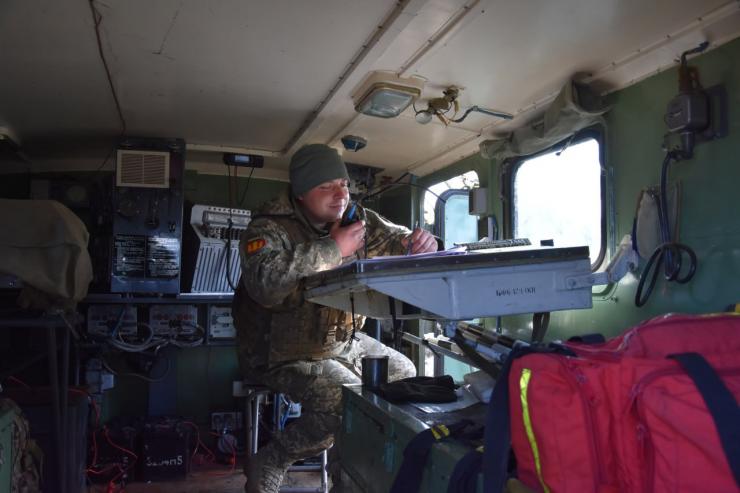
"Brooklyn"
— Tell us about the beginning of the Anti-Terrorist Operation in 2014: where did you meet the beginning of the war in the East and what tasks were set for you and your unit at that time?
— I witnessed the beginning of the Anti-Terrorist Operation in April 2014 in eastern Ukraine, near Sloviansk. At that time, no one fully realized how difficult and large-scale the events that lay ahead would be. But from the first days, it became clear that the country was going through a turning point, and every soldier had to fulfill his duty.
Our unit was given various combat missions — supporting the actions of Ukrainian forces, working on specific objectives, ensuring the advance of units and deterring the enemy. Everything happened very quickly: constant movements, new tasks, a tense situation, and great responsibility for the people around us.
I especially remember our participation in the liberation of Ukrainian cities - Sloviansk, Siverskodonetsk, Popasna, Lysychansk, Severska, Lymana. For us, these were not just settlements, but places and people dear to many who were waiting for the return of peace and Ukraine.
The liberation of Siverskodonetsk also had a special meaning for me, because it is my hometown. It is very difficult to put into words the emotions when you defend and liberate the place where you grew up, where your childhood was spent.
A separate page in memory will remain Debaltseve in the winter of 2014-2015. Those events became a serious test for all the military who were there. It was an extremely difficult period that hardened many - both as soldiers and as people. It was then that the fighting brotherhood, support for each other and the true price of responsibility for one's decisions were especially felt.
2014 was a moment when many of us grew up very quickly. It was then that we finally realized that defending our country is not just a profession, but a lifelong endeavor.
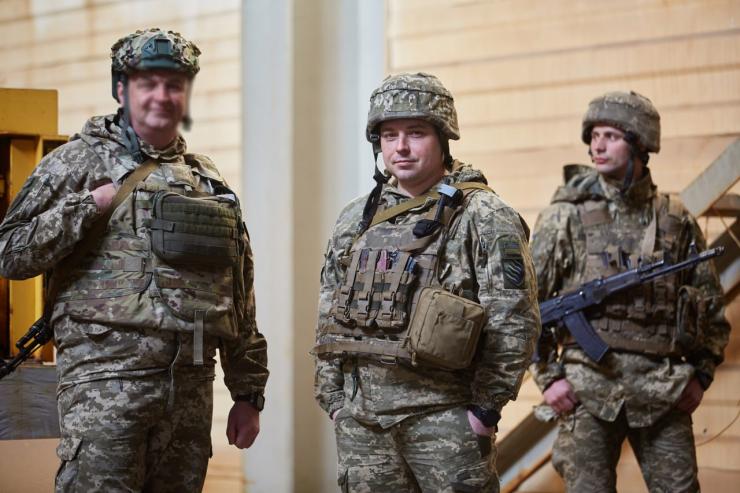
With siblings
— Did you maintain contact with relatives or friends in Severskodonetsk at that time, or were there any problems in communication?
— Yes, I maintained contact with my family and friends in Siverskodonetsk as much as was possible under those conditions. Of course, there were problems with it, especially during the most tense moments, when mobile communication or the Internet could disappear due to hostilities. But even a short message or call back then was very important.
People told different stories about what was happening in the city during that period. It was scary to hear how the self-proclaimed "LPR" was establishing its own order, intimidating people, organizing lawlessness, racketeering, and pressure on local residents and entrepreneurs. A tense atmosphere of uncertainty and fear reigned in the city.
It was especially painful for me, because Severskodonetsk is my hometown, which I remember as peaceful, calm and lively. It was hard to realize that the streets where you grew up suddenly became a place of war, fear and chaos. It was then that I realized even more how important it is to fight for your country, for your cities and for the people who remained there.
— In which direction were you with the unit and what tasks were set for you at the beginning of the full-scale invasion of 2022?
— We met the full-scale invasion of 2022 in the Donetsk direction. For our unit, this was a moment when no more words or explanations were needed — everyone understood their task and their place in the ranks. After years of war, the Ukrainian military became completely different: they had extensive combat experience, confidence in their actions, and a full understanding of who we were fighting.
In the first days of the invasion, the enemy moved in large columns, counting on rapid advance and panic. But it was then that the Ukrainian army showed how much it had changed since 2014. Our units effectively destroyed enemy columns, equipment and manpower, preventing the enemy from realizing his plans. It was difficult, but no one was going to retreat or give up.
A separate great emphasis was placed on counter-battery warfare. We understood well: whoever could detect and destroy enemy artillery faster would save the lives of their infantrymen and gain an advantage on the battlefield.
At that time, artillery work was practically continuous — constant reconnaissance, adjustments, changing positions, and working on targets. All of this required maximum concentration, professionalism, and endurance.
At that time, our units were already ready for a big war — professionally, physically, and morally. Most of the soldiers had combat experience, having gone through the ATO and JFO, so they understood the price of every decision. This is what helped them survive the most difficult first months and prevent the enemy from realizing their plans.
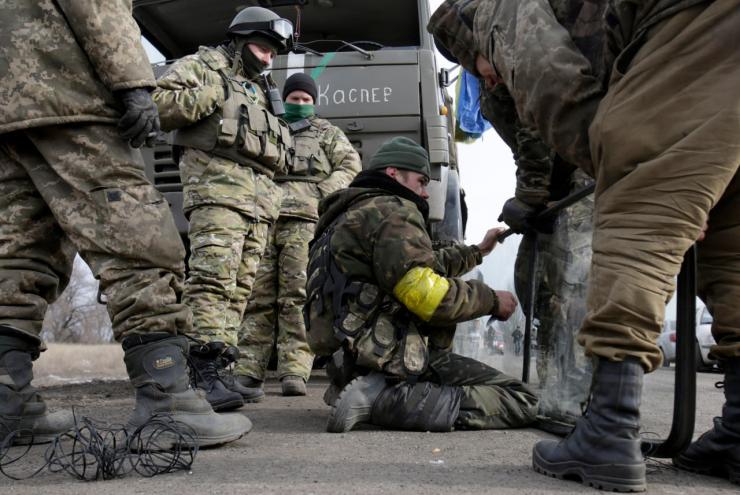
With siblings
— Do you think there are any chances of returning Luhansk region to Ukrainian control?
— I am confident that we will return our territories and the Luhansk region to the control of Ukraine. Today, all units of the Defense Forces of Ukraine are working and fighting for this - infantry, artillery, intelligence, unmanned systems forces, aviation, each in its own direction is doing everything possible for the common goal.
We, our team and our brothers and sisters, do our work every day, understanding what we are fighting for. This is not just a fight for territories — it is a fight for our people, for the right to live in our own state, speak our own language, and build our own future. And it is this motivation that gives us strength even in the most difficult moments.
Of course, everyone understands that this is a very difficult and long path. War requires enormous efforts, endurance and sacrifices. But over the years, Ukrainians have shown the whole world how strong, united and ready we are to fight to the end for our land.
I also believe that people in the temporarily occupied territories remember that they are part of Ukraine.
Despite years of occupation, pressure and propaganda, many people are waiting for the return of normal life, peace and the Ukrainian flag. And I think that after victory we will be able to restore not only our cities, but also trust, connection between people and normal life in the Ukrainian Luhansk region.
— Questions about the service: what qualities should a commander have to effectively manage subordinate personnel and what character traits do you develop in yourself for maximum productivity?
— I believe that a commander should first of all be an example for his personnel. People always see how their commander behaves in difficult situations — whether he is able to take responsibility, make decisions and stay close to his subordinates not only in calm conditions, but also during the most difficult moments. The authority of a commander is built not on words or position, but on actions, professionalism and attitude towards people.
A good commander must have endurance, a cool head, discipline, and the ability to quickly analyze the situation. Especially in war, it is very important to be able to make decisions in conditions of limited time and great responsibility. At the same time, a commander must remain human — to hear his soldiers, support them morally, and understand the condition of the personnel.
Personally, I learned this throughout my service. Theory is important, but combat experience teaches us the most. Starting in 2014, I had to go through many difficult situations that tempered my character and gave me an understanding of the true value of commanders' decisions.
One of the most difficult challenges is responsibility for people, because every soldier is someone's parent, child, husband, or friend. And a commander must always remember this.
The war also taught us to constantly work on ourselves — to develop endurance, self-control, stress resistance, and the ability to act even in the most difficult conditions. It is very important not to lose our humanity and maintain an internal moral core, because people take an example from their commander.
As for the support of personnel, in a protracted war, this is of great importance. Sometimes simple things are enough for a soldier: a normal conversation, support, understanding that he is appreciated and not forgotten. Brotherhood, mutual respect, and trust in the team mean a lot today.
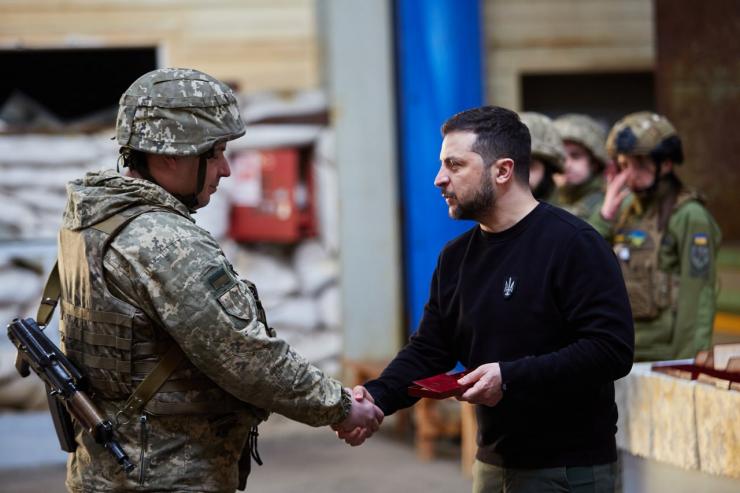
Brooklyn with Ukrainian President Volodymyr Zelensky
— In your personal opinion: what should the civilian population work on to bring Victory closer and support their native army?
— For the civilian population, in my opinion, the most important thing now is to remain united, support the army, and not lose faith in the country. Helping the military, volunteering, supporting the families of defenders, honest work in one's place — all this is also part of a joint struggle. Victory consists not only of actions on the front, but also of the unity of the entire society.
Oksana Tupalska